
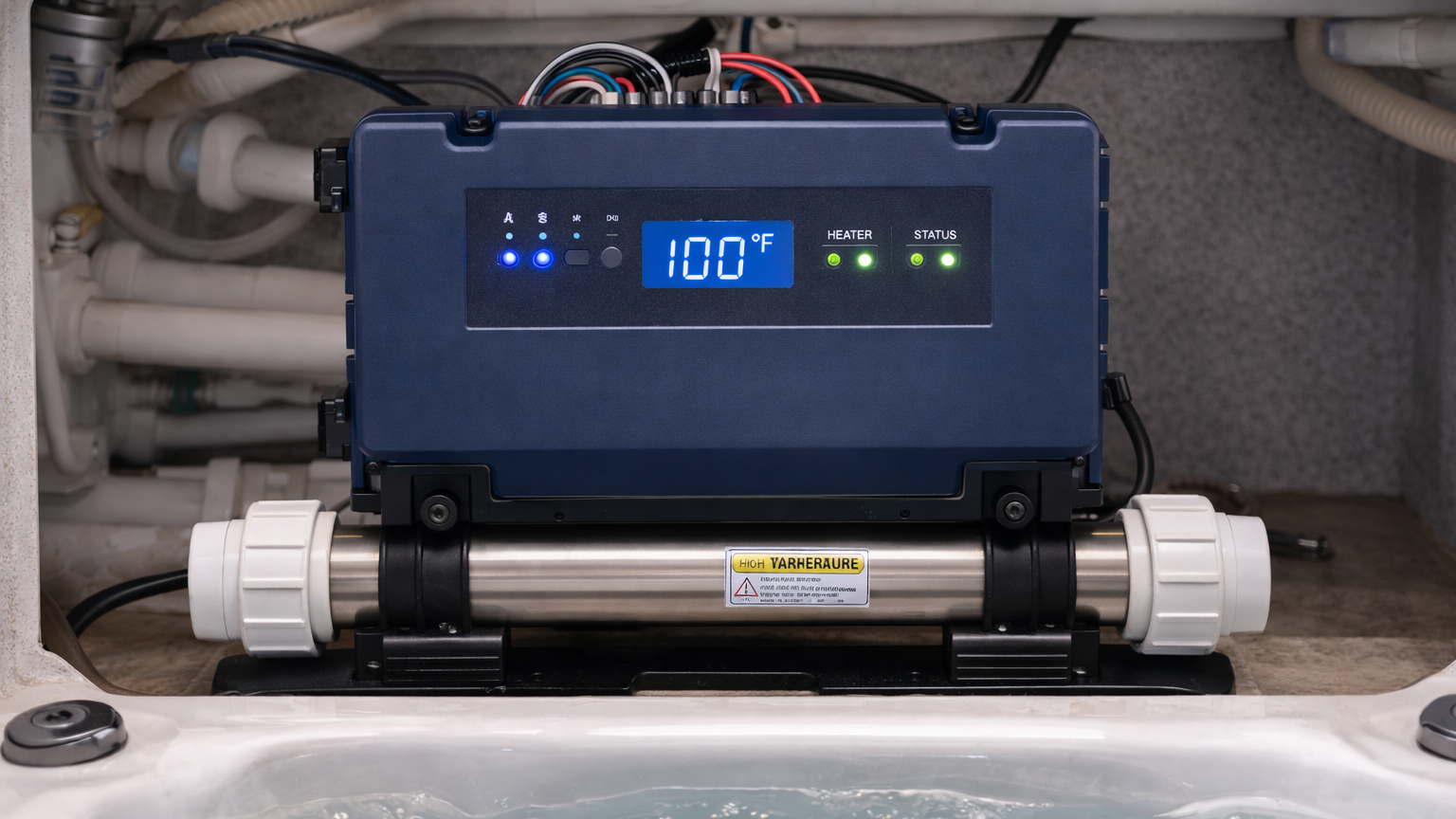
If your hot tub heater starts heating but shuts off shortly afterward, you’re not alone. This is one of the most common (and confusing) hot tub problems because the system appears to be working — just not for long.
In many cases, the heater itself isn’t bad. The spa is shutting the heater down on purpose to protect itself from overheating, low flow, or an electrical issue. The key is figuring out what condition triggers the shutdown.
This guide walks you through the most common reasons a hot tub heater turns on, then off — and how to test each one safely before replacing expensive parts.
To get a more general idea as to why your hot tub isn’t heating visit here: Hot Tub Isn’t Heating, causes, tests and what to check
Safety Notice: This article is provided for informational purposes only. RV systems may include electrical, propane, plumbing, and mechanical components that can pose serious safety risks. Always follow manufacturer guidelines and proper safety procedures. When in doubt, seek assistance from a qualified technician
Start Here: Quick Diagnostic Checklist
Before diving into individual causes, note the answers to these questions:
- Does the heater shut off after a few minutes, or almost immediately?
- Does it happen only when the jets are on high?
- Does the water temperature rise at all before it shuts off?
- Do you see an error code (FLO, FL, HL, OH)?
- Does the breaker trip, or does the heater simply stop heating?
Your answers help narrow the problem much faster.
If the Heater Shuts Off After 2–5 Minutes
This usually points to a flow-related issue, not a bad heater.
Low Water Flow Through the Heater
Even if the pump is running, restricted flow can cause the heater to overheat internally and shut itself down.
Common causes include:
- dirty or clogged filter
- partially closed slice valves
- air trapped in the plumbing
- weak circulation pump
What to check
- Remove the filter and run the spa briefly (never long-term without it).
- Make sure all valves are fully open.
- Bleed air from the pump if it recently ran dry.
If the heater stays on with the filter removed, the filter is the problem.
If the Heater Only Shuts Off When Jets Are On
This often indicates pressure or flow changes, not a heater failure.
Pressure Switch or Flow Switch Issues
When jets engage, internal pressure can change enough to open or close a marginal switch.
What happens
- Heater turns on with circulation pump
- Jets turn on
- Heater shuts off shortly after
What to check
- Inspect the pressure or flow switch for scale or corrosion.
- Make sure the switch wire connections are tight.
- If adjustable, confirm the switch isn’t set too tight.
A pressure switch that’s barely within spec can behave normally until flow conditions change.
If the Heater Turns Off and Shows an HL or OH Error
This indicates the spa believes the water (or heater housing) is overheating.
Temperature Sensor Problems
Bad or drifting sensors can falsely report overheating.
Typical symptoms
- Heater runs briefly, then shuts down
- Displayed temperature may jump unexpectedly
- Error resets after cooling
Basic resistance check
Most temperature sensors measure around:
- 10k ohms at ~77°F (25°C)
- Exact values vary by manufacturer, but large deviations indicate a bad sensor.
If the Heater Turns Off With No Error Code
This is often an electrical supply issue.
Voltage Drop to the Heater
A heater may energize, then shut off if voltage drops under load.
Possible causes:
- loose wire connection
- failing relay or contactor
- undersized wiring
- weak breaker or GFCI
What to check
- Measure voltage at the heater terminals while it’s running.
- Compare voltage when heater is on vs off.
- A drop of more than ~10% under load is a red flag.
This is common on older installations or recently modified electrical setups.
If the Breaker Trips When the Heater Turns Off
This suggests heater or wiring insulation failure.
Heating Element Breakdown
A heating element can heat normally at first, then trip the breaker as it warms and expands.
Signs include:
- breaker trips only when heater runs
- tripping becomes more frequent over time
- visible corrosion on heater terminals
At this point, replacement is usually the correct fix.
Common Misdiagnoses.
- Replacing the heater when the filter is clogged
- Replacing the control board when it’s a flow issue
- Adjusting temperature settings instead of testing sensors
- Ignoring voltage drop under load
Many heaters are replaced unnecessarily because the shutdown cause wasn’t identified first.
When to Stop DIY and Call a Professional
Call a qualified spa technician or electrician if:
- voltage testing shows unstable readings
- breakers trip repeatedly after part replacement
- you suspect control board damage
- insulation resistance testing is needed
Electrical faults can be dangerous if misdiagnosed.
How to Prevent Heater Shutdowns in the Future
- Clean or replace filters regularly
- Maintain proper water chemistry to prevent scale
- Keep water level above skimmer minimum
- Address small flow issues early
- Avoid running jets excessively with dirty filters
Still Not Sure What’s Wrong?
If you’ve gone through the steps in this guide and you’re still unsure what to do next, I offer personalized email consultations.
I’ll review your symptoms, photos (if needed), and the information you’ve gathered to help you determine the most likely cause and the best next step—whether that’s a simple DIY fix or calling a professional.
👉 Learn more about my Pool & Spa Consultation Service
Related Articles
Written by Dan Harvickson, pool & spa repair technician