
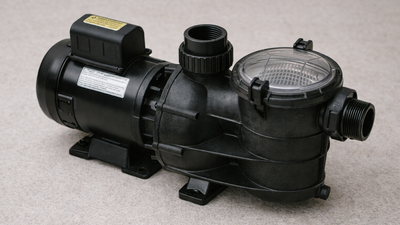
If your pool pump basket keeps filling with air while the pump is running, you’re dealing with a suction-side air problem, not a filtration or pressure issue.
A small amount of air at startup is normal. But if you see continuous air bubbles, a large air pocket in the pump basket, or water never fully filling the housing, something is allowing air into the system — and it will eventually lead to loss of prime, poor circulation, or pump damage.
Safety Notice: This article is provided for informational purposes only. RV systems may include electrical, propane, plumbing, and mechanical components that can pose serious safety risks. Always follow manufacturer guidelines and proper safety procedures. When in doubt, seek assistance from a qualified technician
If you need more information on pool pumps, visit: Pool Pump Problems: Causes, Symptoms, and Fixes (Complete Troubleshooting Guide)
This guide explains why air collects in the pump basket, how to identify the source, and what to fix before replacing parts unnecessarily.
Start Here: Quick Diagnostic Checklist
Answer these questions first:
- Is the pump basket ever completely full of water?
- Do air bubbles continue after several minutes of runtime?
- Does the pump lose prime when shut off?
- Is the pump above the pool’s water level?
- Did this start after maintenance or winter opening?
Your answers narrow the problem quickly.
Why Air Collects in the Pump Basket
Air can only enter the system before the pump, on the suction side.
When air enters:
- it gets trapped in the pump housing
- water flow becomes unstable
- the pump may lose prime or run dry
Pressure-side issues (after the pump) do not cause air in the pump basket.
Most Common Reasons the Pump Basket Fills With Air
1. Pump Lid O-Ring Is Dry, Dirty, or Damaged
This is the most common cause.
Even a small imperfection in the lid seal allows air to be pulled in continuously.
What to check
- remove the lid
- clean the O-ring and groove
- inspect for flattening or cracks
- lubricate with pool-safe silicone grease
A dry O-ring will leak air even if it looks intact.
2. Loose or Leaking Suction Fittings
Threaded fittings and unions are common air entry points.
Check:
- suction unions
- threaded adapters
- valve connections
- drain plugs on the pump housing
Air leaks don’t always drip water — they often pull air silently.
3. Pump Installed Above Water Level
Above-ground pump installations are more sensitive to air leaks.
If the pump is higher than the pool:
- gravity encourages air entry
- minor leaks become major symptoms
- the basket may never fully fill
In these setups, sealing must be nearly perfect.
4. Cracked Pump Lid or Housing
Hairline cracks can be hard to see but cause constant air ingestion.
Signs include:
- persistent air no matter what you reseal
- visible moisture around the lid
- worsening symptoms over time
Replacing the lid is often cheaper than replacing the entire pump.
5. Suction Line Air Leak (Above or Below Ground)
If fittings check out, the leak may be in the plumbing itself.
Possible indicators:
- air increases when valves are adjusted
- air bubbles increase at higher pump speeds
- prime loss accompanies air buildup
Underground leaks are less common but serious.
Simple Tests to Find the Air Leak
Visual Bubble Test
While the pump is running:
- observe the pump basket
- steady bubbles = air leak
- brief startup bubbles = normal
Persistent bubbles always indicate suction-side air.
Soapy Water Test
Apply soapy water to fittings and lids while running.
- inward bubbling = air leak
- works well on unions and threaded joints
This is one of the most effective DIY tests.
Water Drain-Back Test
Turn the pump off and watch the basket.
- rapid drain = large air leak
- slow drain = small leak or check valve issue
This helps distinguish severity.
What This Problem Usually Is NOT
These are commonly blamed but rarely the cause:
- dirty filter
- bad pressure gauge
- clogged return jets
- air relief valve on the filter
Air in the pump basket always originates before the pump.
Common Misdiagnoses That Waste Money
- replacing the pump
- replacing the filter
- blaming the motor
- ignoring lid O-ring condition
Most air problems are sealing issues, not mechanical failures.
How to Fix Air in the Pump Basket
In order of likelihood:
- Clean and lubricate pump lid O-ring
- Tighten and reseal suction fittings
- Replace worn drain plug O-rings
- Replace cracked pump lid
- Pressure-test suction lines if needed
These fixes are inexpensive compared to pump replacement.
When to Stop DIY and Call a Professional
Call a professional if:
- underground plumbing is suspected
- air persists after resealing all fittings
- pressure testing is required
- the pump frequently runs dry
Running with air can destroy the pump seal and motor.
How to Prevent Air Problems in the Future
- keep pool water level correct
- lubricate O-rings annually
- inspect fittings after maintenance
- avoid overtightening unions
- address small air bubbles early
Related Articles
- Pool Pump Won’t Prime
- Pool Pump Loses Prime Overnight
- Pool Pump Is Running But No Water Flow
- Pool Filter Pressure Too High
Written by Dan Harvickson, pool & spa repair technician