
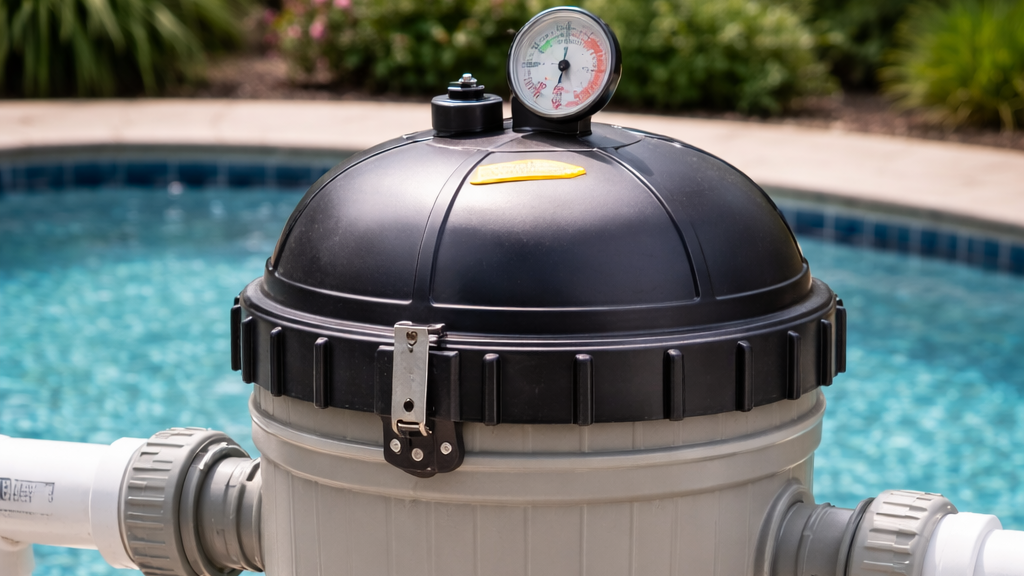
Pool Filters: Types, Problems, Maintenance & How to Choose the Right One
If your pool water is cloudy, your pressure is high, or your pump seems weak, the problem often starts with the pool filter.
Your filter is the heart of your pool’s cleaning system. Without it, your sanitizer can’t keep up — and your water turns dull, dirty, or even green.
In this guide, you’ll learn:
- The 3 main types of pool filters
- How each one works
- Common filter problems
- How to maintain them
- When to replace or upgrade
🔎 The 3 Types of Pool Filters
1️⃣ Sand Filters
How it works:
Water flows through a tank filled with filter sand. Dirt gets trapped between the sand grains.
Best for:
Low-maintenance pool owners.
Pros
- Simple to use
- Backwash to clean
- Lower upfront cost
Cons
- Filters to about 20–40 microns (least fine of the three)
- Can waste water during backwashing
- Needs sand replacement every 3–5 years
2️⃣ Cartridge Filters
How it works:
Water passes through a pleated cartridge that traps debris.
Best for:
Water conservation and lower operating pressure.
Pros
- Filters 10–20 microns
- No backwashing (saves water)
- Lower system pressure
Cons
- Must be manually cleaned
- Cartridges replaced every 1–3 years
3️⃣ DE (Diatomaceous Earth) Filters
How it works:
Uses a powder made from fossilized algae to coat internal grids, trapping extremely fine particles.
Best for:
Maximum water clarity.
Pros
- Filters 2–5 microns (clearest water)
- Excellent for problem pools
Cons
- More maintenance
- Must recharge DE after backwashing
- Slightly higher cost
Common Pool Filter Problems
Most filter issues fall into predictable categories:
High Pressure
- Dirty filter
- Clogged cartridge
- Dirty DE grids
- Closed return line
Low Pressure
- Air leak in suction line
- Dirty pump basket
- Clogged impeller
- Water level too low
Cloudy Water (Even With Good Chemistry)
- Filter undersized
- Worn sand
- Old cartridges
- Channeling in sand bed
DE Blowing Back Into Pool
- Torn grids
- Cracked manifold
- Missing O-ring
How Often Should You Clean a Pool Filter?
General rule:
Clean or backwash when pressure rises 8–10 PSI above clean starting pressure.
Typical timelines:
- Sand: Backwash every 2–4 weeks (seasonal dependent)
- Cartridge: Clean every 1–3 months
- DE: Backwash as needed + full teardown 1–2x per season
How to Choose the Right Pool Filter
Here’s how to decide:
| If You Want… | Choose… |
|---|---|
| Lowest maintenance | Sand |
| Water savings | Cartridge |
| Crystal-clear water | DE |
| Above-ground pool | Sand or small cartridge |
| Large in-ground pool | Large cartridge or DE |
Pro Tip: Bigger is better. An oversized filter runs cleaner and lasts longer.
What Size Pool Filter Do I Need?
Sizing depends on:
- Pool gallons
- Pump flow rate
- Turnover rate (8 hours ideal)
Quick rule:
- 1.5–2x the minimum recommended size = better performance and fewer cleanings.
(Internal link opportunity: “How to Size a Pool Pump”)
When Should You Replace a Pool Filter?
Replace when:
- Tank is cracked
- Cartridges collapse repeatedly
- DE grids fail every season
- Sand filter won’t hold pressure
- System is severely undersized
Most tanks last 8–15+ years if maintained.
Final Thoughts
Your pool filter does more work than any other piece of equipment.
When your water looks bad, pressure is off, or your sanitizer won’t hold — start with the filter.
Maintained properly, it keeps:
- Your water clear
- Your chemicals working
- Your pump protected
- Your swimming stress-free
Read more about pool filters by following one of the links below:
- Pool Filter Pressure Too High
- Low Pool Filter Pressure Causes
- Sand vs DE vs Cartridge Pool Filters
- Pool Filter Cartridge Keeps Clogging? Here’s Why (And How to Fix It)