
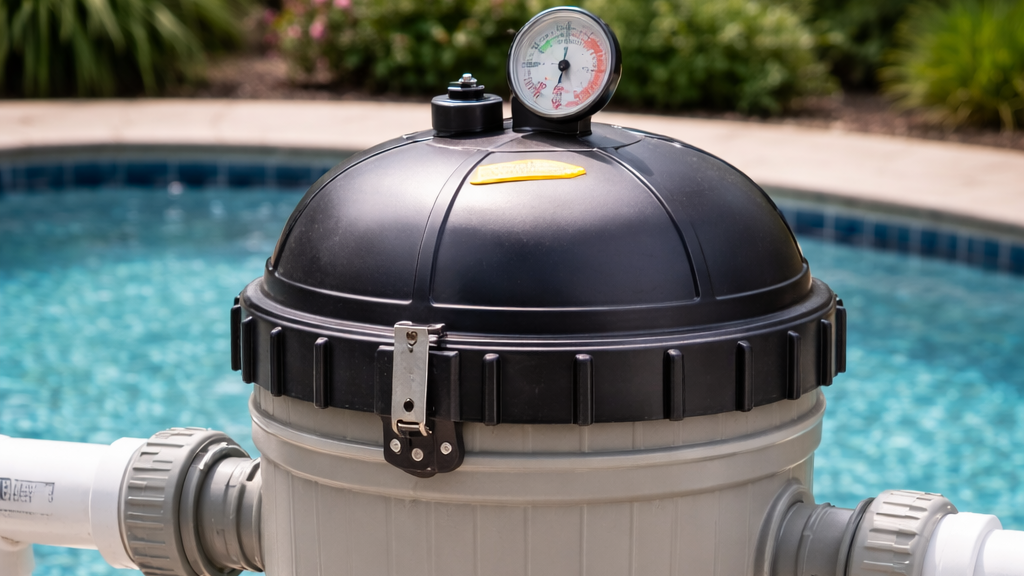
If your pool filter pressure is higher than normal, it means water is struggling to move through the system. High pressure isn’t just a gauge issue — it’s a warning sign that something is restricted, dirty, or incorrectly set.
Running a pool with high filter pressure can reduce circulation, strain the pump, damage internal components, and shorten the life of your equipment. The good news is that most high-pressure problems are easy to diagnose once you know where to look.
I find that the most common reason by far for excessive pressure is a dirty or clogged filter. However, before removing the filter from the canister, it is extremely important that you relieve the air pressure in the canister. Failure to do so can cause serious injury. There’s usually a valve on top of the canister that you can open to release the pressure.
This guide walks you through the most common reasons pool filter pressure is too high, how to confirm the cause, and what to fix before replacing parts.
Safety Notice: This article is provided for informational purposes only. RV systems may include electrical, propane, plumbing, and mechanical components that can pose serious safety risks. Always follow manufacturer guidelines and proper safety procedures. When in doubt, seek assistance from a qualified technician
If you want more information on pool filters, visit: Pool Filters: Types, Problems, Maintenance & How to Choose the Right One
Start Here: Quick Diagnostic Checklist
Before troubleshooting, answer these questions:
- Is the pressure higher than your normal clean reading?
- Did the pressure rise suddenly or gradually?
- Was the filter recently cleaned or backwashed?
- Are return jets weaker than normal?
- Was any equipment or valve adjusted recently?
What “High Filter Pressure” Actually Means
High filter pressure means water is having trouble leaving the filter, not entering it.
In simple terms:
- the pump is pushing water
- something downstream is restricting flow
- pressure builds up inside the filter tank
This is different from low pressure, which points to suction-side issues.
What Is Considered “Too High” Pressure?
Every pool is different, but:
- Your baseline pressure is the reading right after a clean filter
- A rise of 8–10 PSI above baseline usually indicates a problem
- Sudden spikes often mean a blockage or valve issue
Always compare pressure to your normal operating range.
Most Common Reasons Pool Filter Pressure Is Too High
1. Dirty or Clogged Filter Media (Most Common)
As debris builds up, water struggles to pass through.
This applies to:
- sand filters
- cartridge filters
- DE filters
What to do
- backwash sand or DE filters
- clean cartridge filters thoroughly
- recheck pressure after cleaning
If pressure drops back to normal, the filter was the issue.
2. Closed or Partially Closed Return Valves
A closed valve after the filter restricts water flow.
Check
- return line valves
- heater bypass valves
- water feature valves
Even a partially closed valve can raise pressure significantly.
3. Blocked or Restricted Return Lines
Debris can block water after the filter.
Signs include:
- strong pressure reading
- weak return jets
- uneven flow at returns
This is more common after algae blooms or heavy debris loads.
4. Heater or Chlorinator Restriction
Internal heater bypass issues or clogged chlorinators can restrict flow.
Common clues
- pressure rises when heater is enabled
- heater shuts down due to flow errors
- pressure normalizes when heater is bypassed
This points to downstream restriction, not the filter itself.
5. Incorrect Valve Settings After Maintenance
Three-way valves are frequently misaligned.
If water is forced through:
- unnecessary plumbing loops
- partially blocked paths
Pressure rises even with a clean filter.
Always verify valve positions after service.
6. Oversized or High-Speed Pump
If the pump pushes more water than the filter can handle:
- pressure rises
- flow becomes turbulent
- internal damage risk increases
This is common with variable-speed pumps set too high.
Simple Tests to Confirm the Cause
Clean Filter Test
- Clean or backwash the filter
- Restart the system
- Compare pressure to baseline
If pressure drops, the filter was the restriction.
Valve Isolation Test
- Open all return-side valves fully
- Bypass heaters or chlorinators temporarily
- Observe pressure changes
A sudden drop identifies the restriction.
Return Flow Test
- Check strength at all return jets
- Weak flow with high pressure confirms a downstream issue
Common Misdiagnoses That Waste Money
- replacing the pressure gauge without testing flow
- replacing the pump unnecessarily
- ignoring valve positions
- assuming high pressure is “normal”
High pressure always has a cause.
When High Pressure Becomes Dangerous
Shut the system down if:
- pressure climbs rapidly
- filter tank shows signs of stress
- leaks appear around the filter
- pressure exceeds manufacturer limits
Filters are pressure vessels — ignoring high pressure can be dangerous.
When to Stop DIY and Call a Professional
Call a professional if:
- return lines may be blocked underground
- heater internals are suspected
- pressure remains high after cleaning and valve checks
- filter damage is suspected
Some restrictions require specialized tools to diagnose.
How to Prevent High Filter Pressure
- clean filters on schedule
- record baseline pressure
- avoid running pumps at unnecessary speeds
- verify valve positions after maintenance
- address flow issues early
Related Articles
Written by Dan Harvickson, pool & spa repair technician