
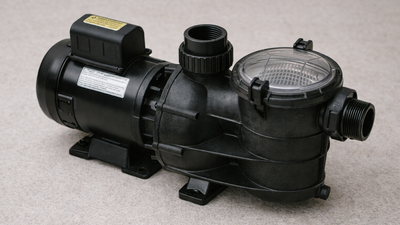
If your pool pump is running but no water is moving through the system, it can feel confusing and alarming. You hear the motor, the pump appears to be on, but there’s little to no circulation, weak returns, or no visible movement in the pool.
In most cases, this is not a bad pump motor. It’s usually caused by a blockage, air issue, or internal pump problem that prevents water from moving even though the motor is spinning.
This guide walks you through the most common reasons a pool pump runs but has no water flow — and how to diagnose the issue step by step before replacing parts.
If you need more information on pool pumps, visit: Pool Pump Problems: Causes, Symptoms, and Fixes (Complete Troubleshooting Guide)
Safety Notice: This article is provided for informational purposes only. RV systems may include electrical, propane, plumbing, and mechanical components that can pose serious safety risks. Always follow manufacturer guidelines and proper safety procedures. When in doubt, seek assistance from a qualified technician
Start Here: Quick Diagnostic Checklist
Before troubleshooting, answer these questions:
- Is there any water in the pump basket?
- Does the pump make a normal sound or a high-pitched whine?
- Did this happen suddenly or gradually?
- Were valves adjusted or maintenance done recently?
- Does the pump lose prime or never prime at all?
What “No Water Flow” Usually Means
When a pump runs with no flow, one of three things is happening:
- Water isn’t reaching the pump
- The pump can’t move the water
- Water is blocked after the pump
Identifying which category you’re in saves a lot of time.
Most Common Reasons a Pool Pump Runs but Has No Flow
1. Pump Is Not Properly Primed
A pump cannot move air.
If the pump basket isn’t completely full of water:
- circulation will be weak or nonexistent
- the pump may sound louder than normal
- flow may surge briefly, then stop
What to check
- Turn off power
- Remove the pump lid
- Fill the basket completely with water
- Reseat the lid and restart the pump
If the pump won’t stay primed, a suction-side issue is likely.
2. Closed or Misaligned Valves
This is extremely common after maintenance.
If suction valves are closed or partially closed:
- the pump has no water source
- the motor runs but moves no water
What to check
- skimmer and main drain valves
- three-way valve positions
- no suction valves fully closed
Always confirm valve positions before assuming a mechanical failure.
3. Clogged Pump Basket, Skimmer, or Impeller
Debris blocks water movement.
Even a partially clogged impeller can stop flow entirely.
What to check
- skimmer basket
- pump basket
- impeller opening (reach carefully with power off)
Leaves, hair, and debris commonly lodge inside the impeller.
4. Suction-Side Air Leak
Air leaks reduce suction to the point where water won’t move.
Common leak points:
- pump lid O-ring
- drain plugs
- unions and fittings
- cracked lids or housings
Air leaks don’t always drip water — they often pull air silently.
5. Clogged or Severely Restricted Filter
If water can’t leave the pump, flow stops.
Signs
- very high filter pressure
- weak or no return flow
- pump sounds strained
Try backwashing or cleaning the filter to restore flow.
6. Failed or Damaged Pump Impeller
If the impeller is damaged:
- motor spins
- no water moves
This can happen due to:
- debris damage
- running dry
- age-related wear
At this point, pump disassembly may be required.
Simple Tests to Narrow It Down
Pump Basket Test
- Basket full of water = suction is present
- Basket empty = priming or suction issue
Pressure Gauge Test
- Zero pressure = no flow
- Very high pressure = blockage
Both tell different stories.
Sound Test
- Normal hum = motor running
- High-pitched whine = running dry
- Grinding = internal damage
Sound changes are valuable clues.
Common Misdiagnoses That Waste Money
- replacing the pump motor
- replacing the filter unnecessarily
- assuming a bad control timer
- ignoring valve positions
Most “no flow” problems are plumbing or priming issues, not motor failures.
When to Stop DIY and Call a Professional
Call a professional if:
- the impeller is damaged
- underground plumbing is suspected
- repeated priming attempts fail
- the pump overheats or shuts down
Running a pump with no flow can cause seal and motor damage.
How to Prevent No-Flow Issues
- maintain proper water level
- clean baskets regularly
- inspect valves after maintenance
- address air leaks early
- avoid running the pump dry
Related Articles
- Pool Pump Won’t Prime
- Pool Pump Loses Prime Overnight
- Pool Pump Basket Fills Up With Air
- Pool Pump Hums But Won’t Start
- Pool Pump Trips Breaker When Starting
Written by Dan Harvickson, pool & spa repair technician