
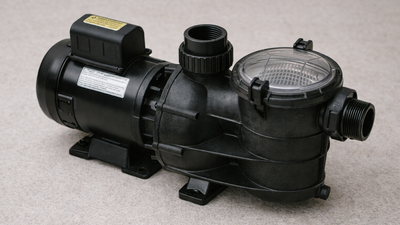
Your pool pump is the heart of your pool’s circulation system. When it isn’t working correctly, everything else suffers—poor filtration, cloudy water, weak returns, and even heater shutdowns.
This guide covers the most common pool pump problems, how to recognize them, and what you can safely fix yourself before calling a pro or replacing expensive parts.
What Does a Pool Pump Do?
A pool pump pulls water from the pool through the skimmer and main drain, pushes it through the filter (and heater if equipped), and returns clean water back to the pool.
When the pump isn’t working properly, water flow is reduced or stops entirely—triggering a chain reaction of other problems.
Common Pool Pump Symptoms
If you’re experiencing any of the following, your pump likely has an underlying issue:
- Pump won’t turn on
- Pump turns on but no water moves
- Low or weak water pressure
- Pump loses prime
- Loud whining, grinding, or rattling noises
- Air bubbles returning to the pool
- Pump shuts off unexpectedly
- Breaker keeps tripping
Each symptom usually points to a specific type of failure, not a bad pump overall.
Most Common Pool Pump Problems (And What Causes Them)
1. Pool Pump Won’t Turn On
If the pump is completely dead:
Possible causes
- Tripped breaker or blown fuse
- Faulty timer or automation relay
- Failed capacitor
- Burnt-out motor
What to check
- Reset the breaker and GFCI
- Bypass the timer (if applicable)
- Listen for a humming sound (often a bad capacitor)
If the motor hums but won’t start, the capacitor is often the culprit—not the motor.
2. Pump Runs But No Water Flow
This is one of the most common complaints.
Possible causes
- Pump lost prime
- Air leak on the suction side
- Clogged pump basket or impeller
- Closed or partially closed valves
- Low pool water level
What to check
- Fill the pump basket with water and reseal the lid
- Inspect lid O-ring for cracks or flattening
- Clean the pump basket and filter
- Check for suction leaks at unions and drain plugs
3. Low Water Pressure or Weak Returns
When water is moving but poorly:
Possible causes
- Dirty or clogged filter
- Blocked impeller
- Undersized pump
- Suction or return line restrictions
What to check
- Clean or backwash the filter
- Remove the pump basket and inspect the impeller
- Check return eyeballs and valves for obstructions
Low pressure is often a filter issue, not a pump failure.
4. Pump Loses Prime Repeatedly
A pump that primes but won’t stay primed almost always has an air problem.
Common causes
- Cracked pump lid
- Worn lid O-ring
- Loose unions or drain plugs
- Suction line air leak underground (less common)
Tip
If bubbles appear in the pump basket or returns, air is entering somewhere before the pump.
5. Loud or Unusual Pump Noises
Different sounds point to different issues:
- Whining or screeching → failing bearings
- Grinding → internal motor damage
- Rattling → debris in impeller
- Cavitation (gravel sound) → restricted water flow
Bearings can’t be repaired—they require a motor replacement.
6. Pump Keeps Tripping the Breaker
Electrical issues should never be ignored.
Possible causes
- Shorted motor windings
- Water inside the motor
- Bad capacitor
- Incorrect breaker size
If the breaker trips immediately, stop restarting it—this can permanently damage the motor.
Can You Fix a Pool Pump Yourself?
Many pool pump issues do not require replacement.
DIY-friendly fixes include:
- Replacing lid O-rings
- Cleaning baskets and impellers
- Replacing capacitors
- Fixing suction air leaks
- Adjusting valves
Motor replacements and internal electrical repairs are best left to professionals unless you’re experienced with electrical work.
When to Replace the Pool Pump
Replacement may make sense if:
- The motor bearings are failing
- The motor windings are burnt
- The pump is over 10–12 years old
- Multiple major components have failed
- You’re upgrading to a variable-speed pump for energy savings
If only one part has failed, repair is often far cheaper than replacement.
Preventing Pool Pump Problems
Regular maintenance goes a long way:
- Keep water level mid-skimmer
- Clean pump basket weekly
- Keep the lid O-ring lubricated
- Maintain proper filter pressure
- Address small leaks early
Most pump failures start as minor issues that were ignored too long.
Related Pool Pump Troubleshooting Guides
Many pump problems share the same root causes. These detailed guides go deeper into specific issues:
- Pool Pump Won’t Prime
- Pool Pump Loses Prime Overnight
- Pool Pump Keeps Tripping Breaker
- Pool Pump Basket Fills With Air
- Pool Pump Hums But Wont Start
- Pool Pump Is Running But There’s No Flow
- How To Tell If A Pool Pump Seal Is Leaking
When to Call a Pool Professional
Call a pro if:
- Electrical testing is required
- The motor needs replacement
- Underground suction leaks are suspected
- You’re unsure about safety
A quick diagnosis can prevent costly damage—or an unnecessary pump replacement.
A malfunctioning pool pump doesn’t automatically mean it’s “bad.”
Most issues are caused by air leaks, clogs, or simple wear items that can be fixed quickly and affordably.
Use this guide to narrow down the problem, then follow the specific troubleshooting articles linked above to fix it with confidence.