
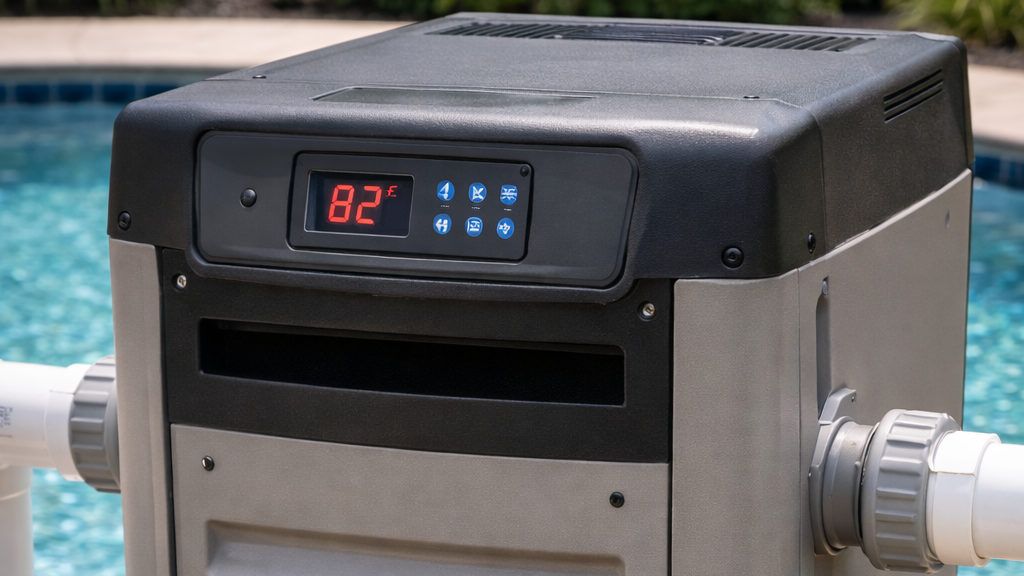
If your pool heater won’t heat the water at all, the problem is usually not the heater itself. In most cases, the heater is being prevented from turning on because it’s detecting a condition that isn’t safe — such as low water flow, improper settings, or an electrical issue.
This guide walks you through the most common reasons a pool heater is not heating at all, how to diagnose each one step by step, and what to check before assuming the heater has failed.
Safety Notice: This article is provided for informational purposes only. RV systems may include electrical, propane, plumbing, and mechanical components that can pose serious safety risks. Always follow manufacturer guidelines and proper safety procedures. When in doubt, seek assistance from a qualified technician
Start Here: Quick Diagnostic Checklist
Before troubleshooting, answer these questions:
- Does the heater power on, or is it completely dead?
- Does the display show an error code?
- Is the pump running when the heater should be heating?
- Is the thermostat set higher than the current water temperature?
- Has any equipment or valve been adjusted recently?
These answers narrow the cause quickly.
What “Not Heating at All” Usually Means
When a pool heater doesn’t heat at all, one of three things is happening:
- The heater is not being allowed to turn on
- The heater is turning on internally but shutting down immediately
- The heater is running, but no heat is being transferred to the water
Identifying which situation applies saves a lot of time.
Most Common Reasons a Pool Heater Is Not Heating
1. Heater Is Not Set Correctly (Very Common)
This sounds obvious, but it’s extremely common.
Check:
- thermostat set above current water temperature
- correct mode selected (pool vs spa)
- timers not overriding heater operation
If the heater isn’t being told to heat, it won’t.
2. Pump Is Not Running or Running at Too Low a Speed
Pool heaters will not operate without sufficient water flow.
Common issues:
- pump not running during heating cycle
- variable-speed pump set too low
- pump losing prime intermittently
What to check
- confirm pump runs continuously while heating
- increase pump speed and retry
- check for air in the pump basket
Low flow prevents the heater from firing.
3. Dirty Filter or Flow Restriction
Restricted flow prevents heating.
Check for:
- dirty or clogged filter
- partially closed valves
- heater bypass valves set incorrectly
Compare filter pressure to your normal baseline. High or low pressure can both stop heating.
4. Pressure Switch or Flow Switch Not Closing
The pressure or flow switch confirms water movement.
If it fails:
- heater won’t ignite
- heater may show a flow-related error
- heater remains idle despite correct settings
Switches can stick, clog, or drift out of adjustment.
5. Heater Ignites but Shuts Off Immediately
This often happens too quickly to notice.
Possible causes:
- low water flow
- high-limit switch tripping
- scale buildup in the heat exchanger
- faulty temperature sensor
This condition is often mistaken for “not heating at all.”
6. Gas Supply Problems (Gas Heaters)
Gas heaters require proper fuel delivery.
Check:
- gas valve fully open
- gas meter or propane tank not empty
- no recent gas work affecting supply
Without fuel, the heater cannot produce heat.
7. Electrical or Control Board Issues
Electrical problems can prevent operation entirely.
Possible issues:
- tripped breaker or blown fuse
- loose wiring
- failing control board
- voltage drop under load
This is more common if the heater is completely unresponsive.
8. Scale or Internal Blockage
Heavy scale buildup reduces heat transfer.
Symptoms include:
- heater runs but water doesn’t warm
- heater cycles without temperature change
- repeated high-limit shutdowns
Scale is common with poor water chemistry or hard water.
Simple Tests to Narrow It Down
Pump Speed Test
- Increase pump speed
- Restart heater
- If heating begins, flow was the issue
Filter Pressure Test
- Compare current pressure to clean baseline
- Clean filter if pressure is elevated
- Retest heater operation
Cycle Observation Test
- Watch heater startup sequence
- Ignition followed by immediate shutdown points to safety lockouts
Common Misdiagnoses That Waste Money
- replacing the heater when the filter is dirty
- blaming the heater when pump speed is too low
- replacing sensors without confirming flow
- assuming gas heaters “just stop working”
Heaters are usually responding to another system problem.
When to Stop DIY and Call a Professional
Call a professional if:
- internal scale buildup is suspected
- control board diagnostics are required
- gas or combustion issues are possible
- electrical testing is uncomfortable
Pool heaters combine water, electricity, and gas — safety matters.
How to Prevent Pool Heater Heating Problems
- keep filters clean
- maintain proper pump speed
- control water chemistry
- inspect valves after service
- address flow issues early
Related Articles
- Pool Heater Turns On Then Off
- Pool Filter Pressure Too High
- Pool Filter Pressure Too Low
- Pool Pump Runs But No Water Flow
Written by Dan Harvickson, pool & spa repair technician