
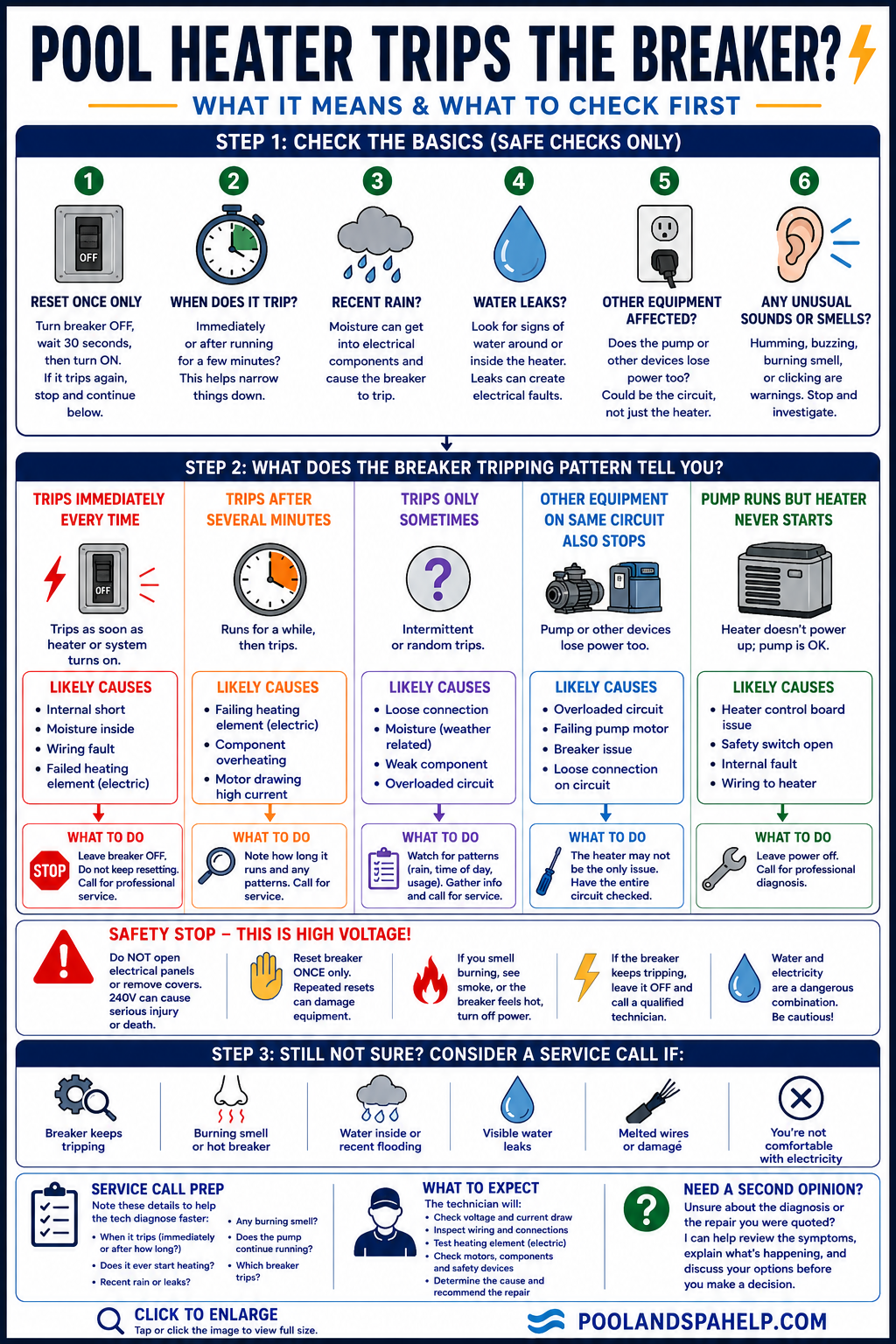
A pool heater that trips the breaker is often a sign of an electrical fault or safety issue—not just a nuisance. Start with a few safe checks: reset the breaker only once, note when it trips (immediately or after running), look for recent rain or water leaks, and check whether other equipment on the same circuit is also affected.
If the breaker trips immediately, the heater may have an internal short, moisture intrusion, or a wiring problem. If it trips after several minutes, a failing heating element (electric heaters), overheating component, or motor drawing too much current may be to blame. Random or intermittent trips can point to loose connections, moisture, or an overloaded circuit.
Stop using the heater immediately if you notice burning smells, smoke, hot electrical components, repeated breaker trips, or visible water around electrical parts.
If the problem continues, a qualified technician can safely test the heater, wiring, breaker, heating element, and electrical components to determine the exact cause. The infographic also includes tips to help you prepare for a service call and gather information that can speed up the diagnosis.
From my experience: When a pool heater starts tripping the breaker, one of the most common problems I’ve found is water getting where it shouldn’t. O-rings and gaskets around the heater assembly can deteriorate or begin leaking over time, allowing water to drip onto electrical connections or components. It may only be a small leak, but it doesn’t take much moisture around electrical equipment to create a ground fault and trip the breaker. If you see any signs of leaking, corrosion, or moisture around the electrical components, shut off power to the heater and have the leak and electrical system properly inspected before using it again.
Quick Summary
If your pool heater trips the breaker:
- ✓ Reset the breaker once only. (Turn the breaker all the way off first, then turn it back on)
- ✓ Determine if it trips immediately or after heating begins.
- ✓ Look for signs of water leaks or moisture.
- ✓ Check whether other equipment also loses power.
- ✓ Stop troubleshooting if the breaker continues tripping.
Repeatedly resetting a breaker can damage electrical equipment and may create a safety hazard.
⚠ Safety Stop
Do NOT remove heater panels or electrical covers while power is on.
Pool heaters often operate on 240 volts, which can cause serious injury or death.
If the breaker continues tripping after one reset, leave the breaker OFF until the cause is identified.
From my experience: When a pool heater repeatedly trips the breaker, one of the first things I suspect is the heating element. I’ve seen elements develop an electrical fault and begin leaking current to ground, which can trip the breaker as soon as the heater is energized. I’ve also seen the element itself be fine, but the seal or O-ring around it has failed. Even a small amount of water seeping past the seal and reaching the electrical connections can cause the breaker to trip. If the heater only trips the breaker when it actually starts heating, the element and the area around its connections are high on my list of things to inspect.
Check These First:
Does the breaker trip immediately?
This often points toward:
- Internal electrical short
- Wiring problem
- Moisture inside electrical components
- Failed heating element (on electric heaters)
Does it run for several minutes first?
This can indicate:
- Heating element failing under load
- Motor drawing excessive current
- Internal component overheating
- Developing electrical fault
Has it recently rained?
Heavy rain or flooding can allow moisture into:
- Electrical compartments
- Junction boxes
- Wiring connections
If the heater appears wet inside, leave it powered off until it has been inspected.
Do you notice water leaking?
Water leaking into electrical components can easily trip breakers.
Look around the heater for:
- Rust streaks
- Active water leaks
- Wet electrical compartments (without opening covers)
Is the breaker itself unusually hot?
A hot breaker or electrical burning smell may indicate:
- Loose electrical connections
- Overloaded circuit
- Failing breaker
Turn the breaker off and arrange for service.
Decision Tree
Breaker trips immediately
↓
Look for obvious water leaks or recent flooding.
↓
No visible issues?
↓
Leave power OFF.
Professional diagnosis recommended.
Breaker trips after several minutes
↓
Does the heater actually begin heating?
↓
Yes
↓
Possible failing heating element or internal electrical component.
Professional service recommended.
Breaker only trips occasionally
↓
Watch for patterns.
- Rain?
- Very hot afternoons?
- Only while heating?
- After long run times?
This information can help speed up diagnosis.
What I Mostly See:
1. Failed Heating Element (Electric Pool Heaters)
A partially shorted heating element is one of the most common causes of breaker trips.
As the element heats up, insulation can break down, causing excessive current flow.
Typical symptoms include:
- Trips after several minutes
- Water begins warming first
- Breaker won’t stay on
2. Moisture Inside Electrical Components
Water and electricity don’t mix.
Moisture inside:
- contactors
- terminal blocks
- wiring
- electrical compartments
can easily trip breakers.
3. Internal Wiring Fault
Damaged wiring, loose terminals, or insulation failure can create short circuits.
These problems are not usually visible without removing electrical covers.
4. Pump or Motor Problems
Sometimes the heater isn’t actually the problem.
If the circulation pump is drawing excessive current, the breaker supplying the equipment may trip.
Watch whether:
- the pump stops first
- the heater never starts
- everything loses power together
5. Failing Breaker
Although less common than heater problems, breakers do wear out.
An aging breaker may nuisance trip even when the equipment is operating normally.
A licensed electrician can test whether the breaker itself is faulty.
When To Book a Service Call
Call a pool service company or electrician if:
- the breaker trips repeatedly
- you smell burning insulation
- the breaker feels hot
- water has entered electrical components
- you see melted wiring
- the breaker trips immediately every time
Electrical faults should not be diagnosed by trial and error.
Service Call Prep
Before calling for service, note:
- Does it trip immediately or later?
- Does the heater ever begin heating?
- Has it recently rained?
- Any visible leaks?
- Any burning smell?
- Does the pump continue running?
- Which breaker is tripping?
These details often reduce diagnostic time.
What to Expect During the Service Call
A technician will typically:
- Verify which breaker is tripping.
- Check incoming voltage.
- Inspect wiring connections.
- Test the heating element (electric heaters).
- Look for moisture or water intrusion.
- Measure current draw.
- Check motors, contactors, relays, and safety devices.
- Determine whether the breaker itself has failed.
Why This Happens
Circuit breakers are designed to protect both people and equipment.
They trip whenever electrical current exceeds safe limits or when a short circuit or ground fault is detected.
Common causes include:
- insulation breakdown
- failing heating elements
- moisture
- damaged wiring
- overloaded circuits
- defective breakers
Although the breaker can be frustrating, it is usually preventing more serious damage.
Frequently Asked Questions
Can I keep resetting the breaker?
No. Reset it once after ensuring there is no obvious hazard. If it trips again, leave it off until the problem is identified.
Is it safe to replace the breaker myself?
If you’re not trained to work inside electrical panels, this is generally not a DIY repair. Electrical panels contain hazardous voltages even when individual breakers are switched off.
Could the pump be causing the breaker to trip?
Yes. If the pump and heater share the same circuit, a failing pump motor or other equipment on that circuit could be responsible.
Can rain cause the breaker to trip?
Yes. Water intrusion into electrical compartments or wiring can create leakage current or short circuits.
Is this an expensive repair?
It depends on the cause. A simple breaker replacement may be relatively inexpensive, while replacing a heating element or repairing internal electrical damage can cost significantly more.
Still Not Sure What’s Wrong?
If you’ve gone through the steps in this guide and you’re still unsure what to do next, I offer personalized email consultations.
I’ll review your symptoms, photos (if needed), and the information you’ve gathered to help you determine the most likely cause and the best next step—whether that’s a simple DIY fix or calling a professional.
👉 Learn more about my Pool & Spa Consultation Service
Continue Troubleshooting:
Written by Dan Harvickson (Founder of Last Mountain Tech) Pool and Spa Specialist