
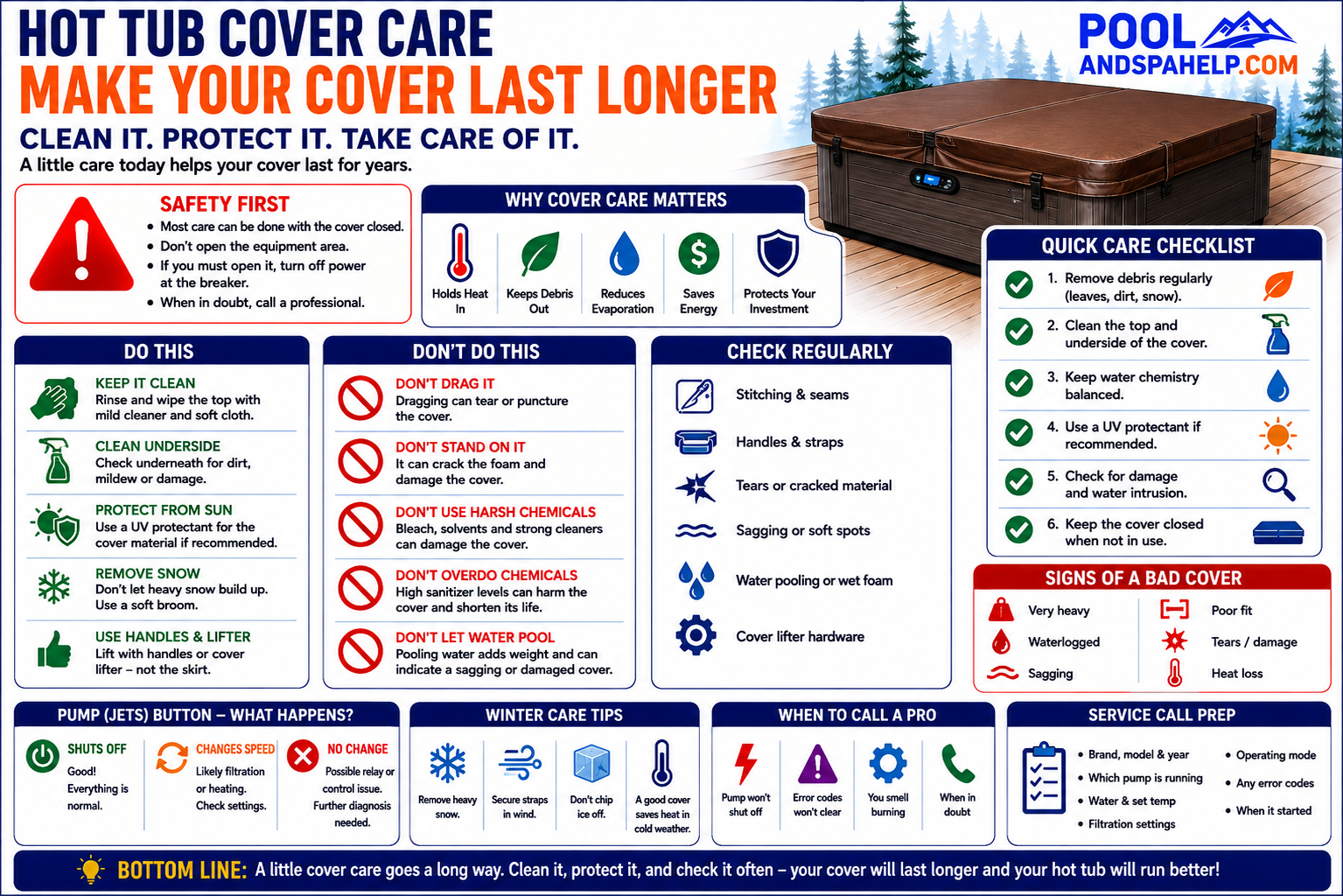
Your hot tub cover does a lot more than keep leaves out of the water.
A good cover helps hold heat in, keeps debris out, protects the water from sunlight, and reduces how hard your hot tub has to work to maintain temperature.
But hot tub covers don’t last forever.
Sun, rain, snow, chemicals, moisture, and everyday use gradually take their toll. A neglected cover can become faded, cracked, heavy, waterlogged, or damaged long before it should.
Fortunately, basic hot tub cover care doesn’t take much time.
Here’s how to clean, protect, and maintain your hot tub cover — and a few things you should avoid if you want it to last.
Why Hot Tub Cover Care Matters
A damaged cover isn’t just a cosmetic problem.
As a cover deteriorates, it may become less effective at insulating the hot tub.
That can lead to:
- Faster heat loss
- Longer heater run times
- Higher energy use
- More debris entering the water
- Increased water evaporation
- Snow or rainwater collecting on the cover
- A cover that becomes increasingly difficult to lift
Taking care of the cover can help extend its useful life and make it easier to spot problems before they become serious.
Keep the Top of the Cover Clean
Dirt, dust, pollen, bird droppings, leaves, and other debris eventually collect on the top of a hot tub cover.
Remove loose debris regularly rather than letting it build up.
For routine cleaning:
- Remove loose dirt and leaves.
- Rinse the cover with clean water.
- Use a soft cloth or non-abrasive sponge if necessary.
- If the cover needs a deeper cleaning, use a mild cleaner that’s suitable for the cover material.
- Rinse away any cleaner thoroughly.
- Allow the surface to dry.
Avoid aggressive scrubbing.
The goal is to remove contamination without damaging the cover’s protective outer material.
Avoid Harsh Household Cleaners
Be careful about grabbing whatever cleaner happens to be under the kitchen sink.
Strong detergents, solvents, bleach, abrasive cleaners, and other harsh chemicals can damage some cover materials or protective coatings.
If you’re using a cleaning product, make sure it’s suitable for your particular cover.
When in doubt, check the cover manufacturer’s care instructions.
Protect the Cover From UV Damage
Sunlight is one of the biggest enemies of outdoor materials.
Over time, UV exposure can cause the exterior of a hot tub cover to:
- Fade
- Dry out
- Become brittle
- Crack
- Lose flexibility
If your cover manufacturer recommends a UV protectant for the material, applying it periodically can help protect the exterior.
Don’t automatically use automotive vinyl products or other protectants unless they’re suitable for your cover material.
Modern hot tub covers aren’t all made from the same exterior materials.
Clean the Underside Too
The underside of the cover spends its life in a warm, humid environment.
Condensation and chemical vapours constantly contact this surface.
Occasionally open the cover and inspect underneath it.
Look for:
- Dirt or residue
- Discoloration
- Mildew
- Damaged material
- Split seams
- Deteriorating plastic
- Unusual chemical damage
Wipe the underside with clean water and a soft cloth as needed.
Keeping this area clean also gives you an opportunity to catch deterioration early.
Don’t Overdo the Sanitizer
More sanitizer isn’t always better.
Extremely high chlorine or bromine levels can be hard on hot tub components, including the underside of the cover.
The same applies after shocking the spa.
If you’ve just added a large dose of oxidizer or sanitizer, follow the chemical manufacturer’s instructions regarding when to close the cover.
Don’t trap unusually strong chemical vapours underneath the cover unnecessarily.
Maintaining balanced water chemistry is good for the hot tub and the cover.
Check Your Water Chemistry Regularly
Poor water chemistry can shorten the life of more than just the cover.
Keep your hot tub water within the ranges recommended by the spa and chemical manufacturers.
Pay particular attention to:
- Sanitizer level
- pH
- Total alkalinity
Consistently poor chemistry can contribute to deterioration of the cover’s underside, pillows, seals, plastics, and other components.
Never Lift the Cover by the Skirt
The hanging flap around the edge of the cover may look like a convenient handle.
It isn’t.
Pulling or lifting the cover by the skirt can tear the material or damage the stitching.
Use the handles provided on the cover.
If you use a cover lifter, make sure it’s installed and adjusted correctly so it supports the cover without putting unnecessary stress on the seams.
Don’t Drag the Cover Across the Ground
Hot tub covers can be awkward.
It’s tempting to pull one off the spa and drag it out of the way.
Try not to.
Concrete, decking, gravel, and other rough surfaces can scrape, puncture, or tear the cover material.
If you don’t have a cover lifter, have another person help move the cover when necessary rather than dragging it.
Don’t Sit or Stand on the Cover
A hot tub cover may look solid, but it isn’t a deck.
Most covers contain foam insulation designed to support normal environmental loads — not people.
Sitting, standing, or walking on the cover can:
- Crack the foam inserts
- Damage the internal structure
- Break seams
- Cause sagging
- Reduce insulation performance
Children should also be taught that the hot tub cover isn’t a play surface.
And don’t place heavy objects on top of it.
Remove Snow Before It Gets Too Heavy
A light layer of snow isn’t usually a reason to panic.
But allowing heavy snow to accumulate can put substantial weight on the cover.
Remove excessive snow before it becomes a large load.
Use something soft, such as a broom, rather than a metal shovel or sharp-edged tool that could cut or puncture the cover.
Be especially careful with frozen snow and ice.
Trying to chip ice off the cover can cause more damage than simply allowing it to melt.
Don’t Let Water Pool on Top
A properly fitting cover should shed most rainwater.
If water continually pools in a low spot, inspect the cover.
Pooling can indicate:
- Sagging foam
- Broken foam inserts
- A damaged cover structure
- Poor fit
- A cover that’s beginning to deteriorate
Standing water also adds weight and puts additional stress on the cover.
If a cover has developed a permanent sag, cleaning it isn’t going to fix the underlying problem.
Check the Cover for Damage
Every so often, give the cover a quick inspection.
You don’t need a complicated maintenance routine.
Look for:
- Cracked or torn exterior material
- Damaged stitching
- Broken handles
- Split seams
- Damaged tie-down straps
- Sagging
- Cracked foam inserts
- Water pooling
- A cover that’s becoming unusually heavy
The earlier you notice damage, the better chance you have of preventing it from getting worse.
Pay Attention if the Cover Is Getting Heavy
One of the most common signs of an aging hot tub cover is increased weight.
A cover that used to be easy to lift may gradually become surprisingly heavy.
This can happen when moisture gets inside and is absorbed by the foam insulation.
Once the foam becomes badly waterlogged, simply drying the outside of the cover won’t solve the problem.
A heavy cover is worth investigating because waterlogged insulation can also become much less effective at retaining heat.
Keep the Cover Closed When the Hot Tub Isn’t Being Used
One of the easiest ways to reduce heat loss is also the most obvious:
Keep the cover closed.
Leaving the spa uncovered unnecessarily allows heat and moisture to escape quickly.
The cover should normally stay closed whenever the hot tub isn’t being used, except when water-care instructions specifically require ventilation after adding chemicals.
Keeping the cover closed also helps keep debris out and reduces exposure of the water to sunlight.
Make Sure the Cover Fits Properly
A cover should sit properly over the spa without large gaps around the edges.
A poor-fitting cover can allow:
- Heat to escape
- Wind underneath the cover
- Debris into the spa
- Increased evaporation
If the cover has shifted, warped, or deteriorated enough that it no longer fits correctly, it may not be providing the insulation it once did.
Check the Cover Lifter
If your hot tub has a cover lifter, inspect it occasionally too.
Make sure:
- Mounting hardware is secure
- Nothing is bent or damaged
- The lifter moves freely
- The cover isn’t being pinched
- The lifter isn’t pulling excessively on seams or handles
A good cover lifter makes a heavy cover much easier to manage.
A damaged or poorly adjusted one can actually shorten the life of the cover.
Be Careful With Wind
Wind can destroy a hot tub cover surprisingly quickly.
Use the cover’s tie-down straps and locking clips as intended.
If strong winds are common where you live, make sure the cover is properly secured whenever the spa isn’t being used.
Don’t rely on placing heavy objects on top of the cover to hold it down. That can damage the foam and create other problems.
Hot Tub Cover Care in Winter
Winter adds a few extra challenges.
Keep an eye on:
- Heavy snow accumulation
- Ice buildup
- Frozen straps or clips
- Wind
- Damage around the cover edges
- Gaps that allow heat to escape
Don’t pry or force frozen components.
And avoid using sharp tools to remove ice from the cover.
A properly maintained cover becomes especially important in cold weather because it’s one of the spa’s main defenses against heat loss.
A Simple Hot Tub Cover Maintenance Routine
Cover care doesn’t need to become another major chore.
A simple routine is usually enough.
Every Few Weeks
Give the cover a quick visual inspection.
Remove debris and check for obvious damage.
Every Month or Two
Clean the exterior as needed and inspect the underside.
Check the seams, handles, straps, and cover lifter.
A Few Times a Year
Give the cover a more thorough cleaning and apply an appropriate UV protectant if recommended for the material.
Check carefully for sagging, damaged foam, water intrusion, or deterioration.
Before Winter
Make sure the cover fits properly, the straps and clips work, and the cover is structurally sound enough to handle winter conditions.
Signs Your Hot Tub Cover May Need Replacement
Good maintenance can extend a cover’s life, but it can’t make one last forever.
Replacement may be worth considering if the cover:
- Has become extremely heavy
- Is badly waterlogged
- Has broken or collapsed foam
- Sags badly
- No longer fits properly
- Has major tears or failed seams
- Allows significant heat to escape
- Continually collects water
- Has extensive deterioration underneath
At some point, replacing a failing cover makes more sense than continuing to patch it.
Frequently Asked Questions
How often should I clean my hot tub cover?
There’s no single schedule that works for every environment. Inspect it every few weeks and clean it whenever dirt, pollen, residue, or other contamination starts building up.
Can I use dish soap on a hot tub cover?
Check the cover manufacturer’s recommendations first. If soap is required, use a mild product that’s compatible with the cover material and rinse it thoroughly. Avoid harsh detergents and solvents.
Should I use a protectant on my hot tub cover?
If the cover manufacturer recommends a UV protectant for the exterior material, it can help reduce weather and sun damage. Don’t assume every vinyl or automotive protectant is appropriate.
Why is my hot tub cover getting so heavy?
Moisture may have entered the cover and been absorbed by the foam insulation. Once a cover becomes badly waterlogged, replacement is often the practical solution.
Can I stand on my hot tub cover?
You shouldn’t. Most hot tub covers aren’t designed to support people. Standing or sitting on one can crack the foam and damage the cover.
Should I remove snow from my hot tub cover?
Remove excessive snow before the weight becomes significant. Use a soft broom or similar tool rather than a sharp shovel that could damage the cover.
Should I leave my hot tub cover open after adding chemicals?
Some chemical treatments require the spa to remain uncovered temporarily so concentrated vapours can escape. Follow the instructions for the specific product you’re using rather than automatically closing the cover immediately.
The Bottom Line
A hot tub cover doesn’t require much maintenance, but a little care can go a long way.
Keep it clean, protect it from unnecessary chemical and UV damage, remove excessive snow, don’t drag or stand on it, and inspect it regularly for water intrusion or structural damage.
Most importantly, pay attention when the cover starts changing.
If it becomes noticeably heavier, starts sagging, stops fitting properly, or develops significant damage, those are signs that normal cover care may no longer be enough.
Taking care of the cover helps protect more than the cover itself — it helps your hot tub retain heat, stay cleaner, and operate more efficiently.
Related Articles:
Written by Dan Harvickson (Founder of Last Mountain Tech) Pool and Spa Specialist