
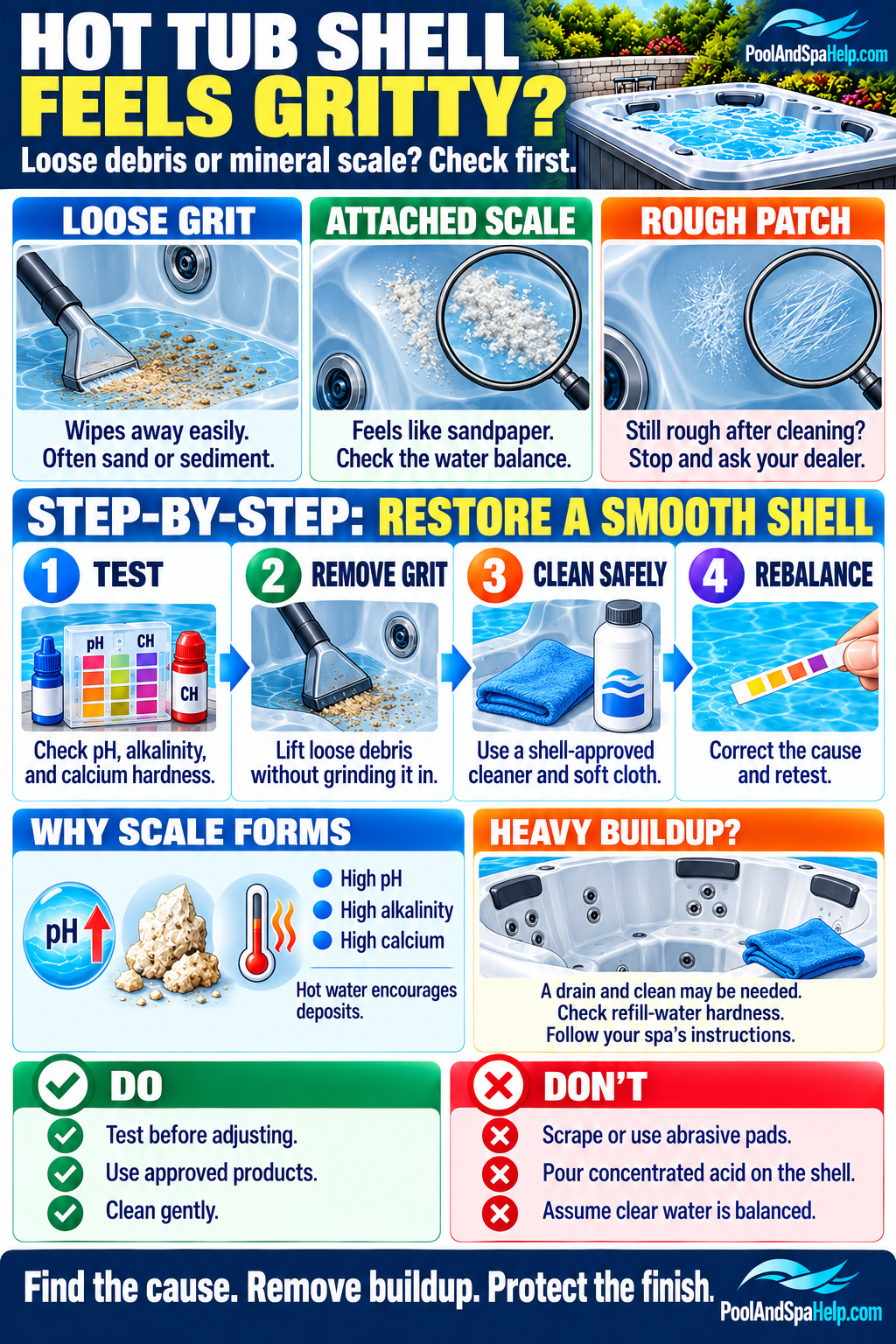
Your hot tub shell used to feel smooth. Now the seats, floor, or walls feel rough—almost like fine sandpaper.
A gritty coating that stays attached to the shell often points to mineral scale. Loose particles that wipe away are more likely to be sediment or debris.
Before adding chemicals or scrubbing the surface, work out which one you are dealing with. The wrong cleaning method can turn a removable deposit into permanent scratches.
Safety Stop: Don’t Scrape the Shell
Avoid razor blades, metal scrapers, abrasive pads, and scouring powders.
Even if a deposit feels hard, the surface underneath can still scratch. Use cleaning products and tools approved for your particular shell material. Jacuzzi specifically advises against abrasive materials that could damage acrylic surfaces.
Do not pour concentrated acid onto the shell or deliberately drive the water’s pH below its operating range to dissolve deposits.
Keep the hot tub out of use during cleaning or chemical treatment. Before bathing, confirm that the water is clear and sanitizer and pH are within the ranges specified for your system.
Check First: Does the Grit Wipe Away?
Gently wipe a small area with a clean, soft cloth. Do not grind the particles into the finish.
If It Wipes Away Easily
Loose material may include:
- Sand or dirt carried in on feet.
- Windblown debris.
- Sediment introduced during filling.
- Mineral particles that have settled out of the water.
Look at where it collects. Loose grit often settles on seats, steps, and the footwell.
If the Surface Still Feels Rough
An attached, sandpaper-like coating is more consistent with scale, especially if it covers several submerged surfaces or appears around the jets and waterline.
Scale forms when dissolved minerals come out of the water and deposit on surfaces. SpaGuard describes these deposits as rough and sandpaper-like.
If It Feels Slippery Instead
A slippery or slimy coating needs a different approach. Check sanitizer and investigate organic buildup.
Gritty and slimy are different symptoms. Do not assume a scale treatment will correct a sanitation problem.
Follow the Symptoms
| What you notice | Where to start |
|---|---|
| Loose grit mainly in the footwell | Dirt, sand, or fill-water sediment |
| Rough coating attached to walls and seats | Mineral scale and water balance |
| White or chalky deposits around jets | Possible mineral buildup |
| Grit appeared after adding chemicals | Review the product, dose, and water readings |
| One isolated rough patch remains after cleaning | Possible surface damage or original texture |
| Slippery coating with cloudy or musty water | Sanitizer and contamination checks |
These clues help narrow the search. They do not confirm the cause by themselves.
Why Does Scale Form on a Hot Tub Shell?
Calcium can remain dissolved in the water without making the shell rough. Trouble starts when the water conditions favour deposits forming.
The main things to check are:
- pH: High pH encourages calcium carbonate scale.
- Total alkalinity: Excessive alkalinity can contribute to scaling conditions and make pH harder to manage.
- Calcium hardness: High calcium increases the potential for mineral deposits.
- Temperature: Hot water can make scale formation more likely.
Hot Spring identifies high pH, high alkalinity, and high calcium content as causes to investigate when scale appears.
High calcium is not the only factor. A hot tub with moderately hard water can still develop deposits if its pH repeatedly climbs.
How to Fix a Gritty Hot Tub Shell
Step 1: Test the Water Before Changing It
Record:
- pH.
- Total alkalinity.
- Calcium hardness.
- Sanitizer level.
Use a test kit that measures calcium hardness specifically. Some strips measure total hardness, which is not exactly the same measurement.
If a reading is unexpected or outside your kit’s range, have a water sample checked before making a large adjustment.
Compare the results with your hot tub and sanitizer-system instructions. Calcium requirements vary, so do not assume every spa uses the same target.
Step 2: Remove Loose Material Gently
If the grit is loose, use a suitable spa vacuum or remove it during a planned drain and clean.
Wipe surfaces gently with a soft cloth. Avoid pushing gritty debris around under pressure, which can scratch the finish.
Check the filter and clean it as directed. Also consider how the material entered:
- Were people walking through sand or soil before getting in?
- Was the cover left open during windy weather?
- Was the filling hose dirty?
- Did sediment appear in the source water?
Removing the grit helps, but preventing the next load from entering saves repeated cleaning.
Step 3: Correct the Conditions Causing Scale
If the readings show a water-balance problem, correct it according to your water-care instructions.
When alkalinity and pH are both high, plan the adjustment around both readings. Make measured changes, circulate, and retest rather than repeatedly adding chemicals without checking the result.
Correcting the water helps prevent more buildup. It may not remove an established coating.
If calcium hardness is too high, lowering pH does not remove that calcium from the water. A partial drain and refill with a suitable lower-calcium source may be needed.
Check the replacement water first. Refilling with the same hard water may produce little improvement.
Do not fill entirely with softened water unless your manufacturer allows it and you can establish the required final water balance.
Step 4: Choose a Suitable Scale-Removal Method
The cleaning method depends on how much scale is present and what your shell manufacturer permits.
For light deposits, an approved spa scale-treatment product may be suitable. Read the label carefully: a product intended to help prevent scale is not necessarily designed to remove an existing layer.
For stubborn deposits, draining and cleaning the shell may be more practical.
Follow this order:
- Follow the manufacturer’s shutdown and draining procedure.
- Apply a cleaner approved for the shell and the type of deposit.
- Allow only the contact time specified.
- Clean gently with an approved soft cloth or tool.
- Rinse thoroughly and remove the rinse water.
- Refill, balance, and establish sanitizer before use.
Do not let cleaning products dry on the shell unless their instructions specifically allow it.
In freezing weather, plan the work carefully. An empty shell can still have water trapped inside its plumbing.
Step 5: Check Whether the Roughness Is Gone
After cleaning, gently check the surface again.
If the deposit has come off and the shell feels smooth, monitor the water balance to keep it that way.
If an isolated area remains rough, stop scrubbing. It may be a scratch, worn finish, original moulded texture, or another surface issue.
Take clear photographs and contact the manufacturer or dealer before trying stronger chemicals or polishing compounds.
What If the Grit Appeared After Adding Chemicals?
If the shell became gritty shortly after treatment, review what was added before adding anything else.
Check:
- The product name and its intended purpose.
- The amount used.
- Your actual water volume.
- Whether circulation was running as instructed.
- Whether pH or alkalinity rose sharply.
- Whether calcium increaser was added without a confirmed need.
Some water-balance changes can cause minerals to come out of solution. Product residue or undissolved material may also need investigation.
Do not assume the solution is another dose of the same chemical. Test the water and ask your supplier for help if the cause is unclear.
Never mix chemicals together or pre-dissolve a product unless its label directs you to do so.
Does Scale on the Shell Mean There Is Scale in the Heater?
It is possible, but the shell cannot tell you how much buildup is inside the equipment.
The same water circulates through the heater and plumbing, so conditions that allow shell deposits can also affect those components. Hot Spring notes that high calcium can contribute to scale on both the shell and equipment.
If rough surfaces appear alongside flow errors, poor heating, or reduced circulation, have the equipment checked.
A general plumbing purge product is not automatically a mineral descaler. Use products approved for the problem and your equipment.
How to Keep the Shell Smooth
- Check pH regularly, including after heavy jet use.
- Keep alkalinity within your system’s recommended range.
- Test calcium before adding calcium increaser.
- Check the fill water when investigating recurring scale.
- Clean filters as directed.
- Keep sand and dirt out of the tub.
- Address light deposits before they become a thick coating.
If pH keeps rising, investigate the pattern. Aeration from jets and air controls can contribute to pH rise, particularly when alkalinity is high.
When to Book Service
Get help if:
- Heavy deposits return soon after cleaning.
- You cannot bring the water into balance.
- Heating or circulation problems accompany the buildup.
- You are unsure which cleaner is safe for the shell.
- A rough patch remains after deposits have been removed.
- The surface looks cracked, blistered, flaking, or damaged.
Before calling, record your water readings, fill-water source, recent chemical additions, and when the roughness first appeared. Photographs taken before cleaning can also help.
Frequently Asked Questions
Why does my hot tub feel like sandpaper?
An attached sandpaper-like coating often indicates mineral scale. Loose grit, original surface texture, and damage can feel similar, so start with a gentle wipe test and water testing.
Can the water look clear while the shell has scale?
Yes. Deposits can attach to the shell even when the water looks clear. Appearance does not replace testing pH, alkalinity, and calcium hardness.
Will lowering pH remove the rough coating?
Restoring proper pH helps correct scaling conditions, but it may not remove established deposits. Do not deliberately lower pH below the operating range as a cleaning shortcut.
Should I drain the hot tub immediately?
Not always. Loose debris may only need removal, while light scale may have an approved treatment option. Heavy buildup or excessively high calcium may make draining and cleaning the better choice.
Will a normal hose filter remove calcium?
Do not assume it will. Many hose prefilters remove sediment or certain metals while allowing dissolved calcium to pass through. Check the product’s stated capabilities and test the water.
Can I scrub the scale off with an abrasive pad?
Avoid abrasive pads unless your shell manufacturer specifically approves that exact product. Removing scale is not worth leaving permanent scratches.
Related Articles:
- Hot Tub Water Chemistry: A Simple Guide to Clear, Safe Water
- Hot Tub Water Is Foamy: Causes, Troubleshooting, and How to Fix It
- Slimy Hot Tub Water: Causes, Fixes, and How to Get Rid of It
- Hot Tub Water Smells Musty? What to Check and How to Fix It
Written by Dan Harvickson (Founder of Last Mountain Tech) Pool and Spa Specialist