
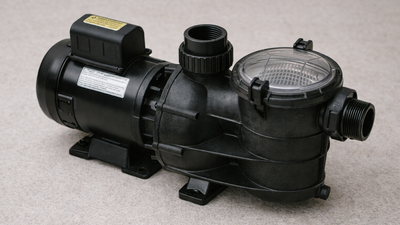
Pool Pump Hums But Won’t Start
If your pool pump hums but won’t start, it means the motor is receiving power but can’t begin turning. This is a common issue and, in many cases, it’s fixable without replacing the entire pump.
The humming sound is an important clue. It tells you the electrical supply is present, but something is preventing the motor from spinning. The cause could be electrical, mechanical, or related to internal motor components.
This guide walks you through the most common reasons a pool pump hums but won’t start — and how to diagnose the problem safely before spending money on major parts.
If you need more information on pool pumps, visit: Pool Pump Problems: Causes, Symptoms, and Fixes (Complete Troubleshooting Guide)
Safety Notice: This article is provided for informational purposes only. RV systems may include electrical, propane, plumbing, and mechanical components that can pose serious safety risks. Always follow manufacturer guidelines and proper safety procedures. When in doubt, seek assistance from a qualified technician
Start Here: Quick Diagnostic Checklist
Before troubleshooting, answer these questions:
- Does the pump shaft spin freely by hand?
- Does the pump trip the breaker after humming?
- Did the problem appear suddenly or after sitting unused?
- Is the pump hot to the touch?
These answers help narrow the problem quickly.
What a Humming Pool Pump Usually Means
When a pool pump hums:
- power is reaching the motor
- the motor is energized
- the motor is unable to start rotating
This is usually caused by a failed start capacitor, a stuck motor shaft, or internal motor damage.
Most Common Reasons a Pool Pump Hums but Won’t Start
1. Failed Start Capacitor (Most Common Cause)
(Be extremely careful when handling capacitors as they can store a lot of electricity)
The start capacitor provides the extra torque needed to get the motor turning.
When it fails:
- the motor hums
- the shaft doesn’t rotate
- the pump never starts
Common signs
- pump hums loudly
- no water movement
- pump may start briefly if spun by hand
Capacitors commonly fail after winter storage or long periods of inactivity.
2. Motor Shaft Is Stuck or Seized
Rust, debris, or worn bearings can prevent rotation.
What to check
- turn off power
- remove the rear motor cover
- attempt to rotate the shaft with a screwdriver or wrench
If the shaft doesn’t turn freely, the motor may be seized.
3. Pump Starts When Spun by Hand
This strongly points to a bad start capacitor.
If the motor starts after manual spinning:
- capacitor is not supplying enough starting torque
- replacement is usually inexpensive and effective
This is one of the clearest diagnostic signs.
4. Debris Jammed in the Impeller
Debris can physically block rotation.
What to check
- turn off power
- remove pump basket
- inspect the impeller opening carefully
Small stones, leaves, or broken plastic can jam the impeller and prevent startup.
5. Low or Incorrect Voltage
Motors need proper voltage to start.
Possible causes:
- loose wiring
- failing breaker
- undersized wiring
- voltage drop under load
Low voltage may allow humming but not startup.
6. Failed Bearings or Internal Motor Damage
If bearings are worn:
- motor may hum
- shaft may feel rough or stiff
- motor may overheat quickly
At this point, motor replacement is often the best option.
Simple Tests to Confirm the Cause
Manual Spin Test
With power off:
- spin the shaft by hand
- should rotate smoothly
Rough or stuck movement indicates mechanical issues.
If the shaft spins freely, then a bad capacitor is likely the cause.
Voltage Test
Measure voltage at the motor terminals:
- compare to motor nameplate
- significant drop under load indicates a supply issue
Common Misdiagnoses That Waste Money
- replacing the entire pump instead of the capacitor
- assuming the motor is bad without testing
- ignoring impeller blockages
- overlooking voltage problems
Many humming pumps are repaired with a simple capacitor replacement.
When Replacing the Pump or Motor Makes Sense
Replacement is usually justified if:
- motor shaft won’t turn
- bearings are noisy or seized
- motor overheats repeatedly
- pump is old and inefficient
At that point, replacement improves reliability and efficiency.
When to Stop DIY and Call a Professional
Call a professional if:
- you’re uncomfortable working with electricity
- voltage readings are unstable
- motor overheats quickly
- wiring damage is suspected
Motor diagnostics can be dangerous if done incorrectly.
How to Prevent Pump Starting Issues
- keep the pump dry and covered
- address water leaks early
- avoid running the pump dry
- maintain proper electrical connections
Related Articles
- Pool Pump Won’t Prime
- Pool Pump Runs But No Water Flow
- Pool Pump Loses Prime Overnight
- How To Tell If A Pool Pump Seal Is Leaking
- Pool Pump Trips Breaker When Starting
Written by Dan Harvickson, pool & spa repair technician