
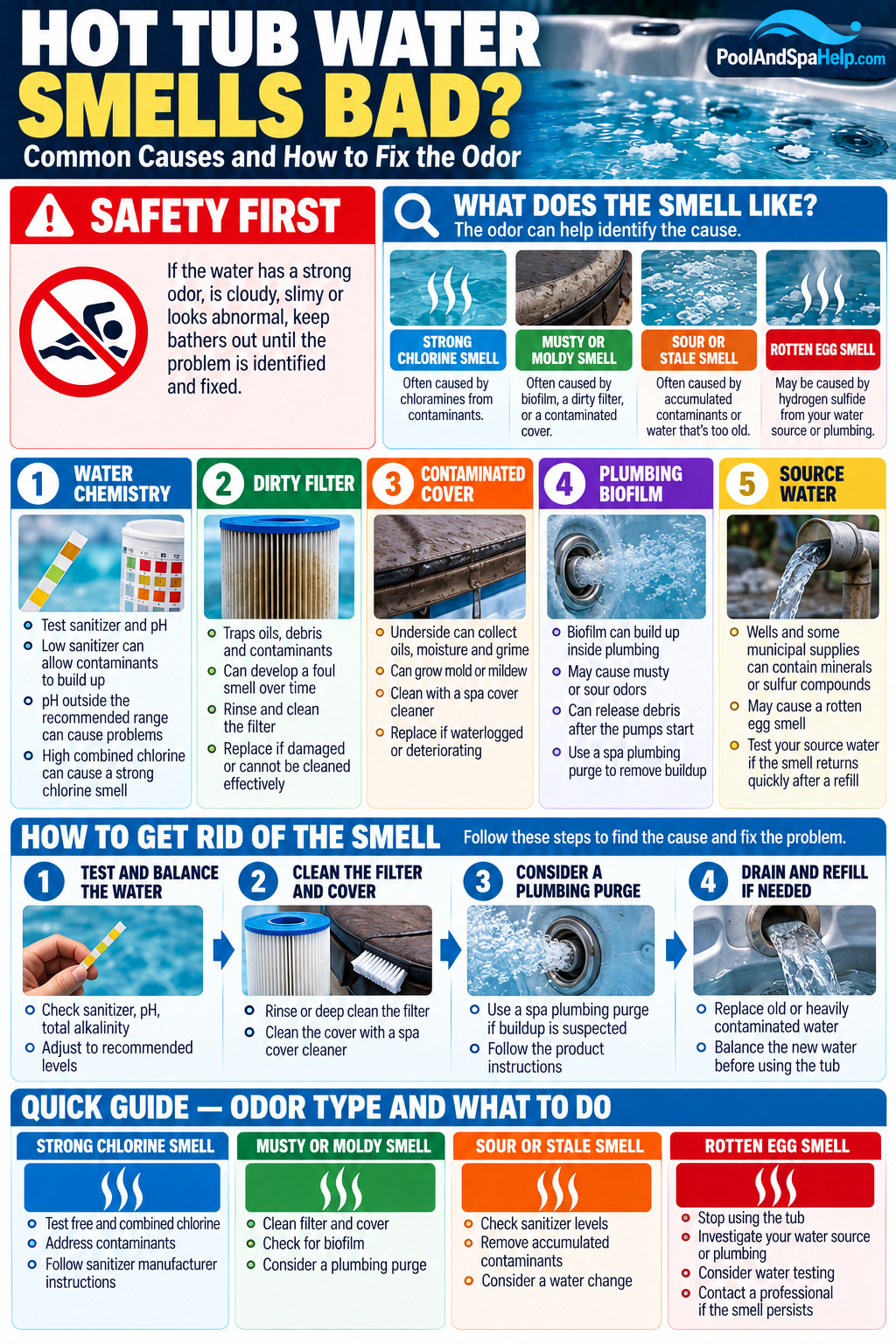
Bad-smelling hot tub water is more than an unpleasant surprise when you lift the cover. A strong chlorine smell, musty odor, rotten egg smell, or sour water can indicate a water chemistry problem, contamination, or buildup inside the plumbing.
The good news is that most hot tub odors have identifiable causes. The key is determining what the smell indicates before adding more chemicals or draining the tub.
Why Does My Hot Tub Water Smell Bad?
The type of odor can provide clues about what is happening in your hot tub.
- Strong chlorine smell: Often associated with chloramines, which form when chlorine reacts with contaminants such as sweat, body oils, and other organic material. It does not necessarily mean there is too much chlorine.
- Musty or moldy smell: May indicate biofilm, organic buildup, a dirty filter, or moisture and contamination around the cover.
- Rotten egg smell: May be associated with hydrogen sulfide, which can originate from certain water sources or plumbing conditions. Stop using the tub until the cause is identified.
- Sour or stale smell: Often points to accumulated contaminants, inadequate sanitation, or water that has been in use too long.
- Earthy or swampy smell: Can indicate organic contamination, poor water circulation, or inadequate sanitizer levels.
These odors are clues rather than definitive diagnoses. Water chemistry testing and a few basic inspections can help narrow down the cause.
Safety First: Before Troubleshooting
Before using the hot tub again, check the water condition.
- Test the sanitizer and pH levels with a reliable test kit.
- Keep bathers out if the water is cloudy, unusually discolored, slimy, or has an unexplained strong odor.
- Never mix chlorine, bromine, shock products, acids, or other pool and spa chemicals together.
- Follow the chemical manufacturer’s directions for dosing, ventilation, and the required waiting period before bathing.
If the water has a rotten egg smell, avoid leaning over the water to investigate. Hydrogen sulfide can be hazardous at sufficient concentrations, and smell alone cannot determine whether an area is safe.
Step 1: Test the Water Chemistry
Start by checking the sanitizer level and pH.
For most residential hot tubs using chlorine, a typical target is approximately 3–5 ppm free chlorine. For bromine systems, a typical target is approximately 4–6 ppm bromine. Always follow your spa and sanitizer manufacturer’s recommendations, as requirements vary by system.
A suitable pH range for many hot tubs is 7.2–7.8.
What the results tell you:
- Low or zero sanitizer: The water may not be adequately disinfected, allowing contaminants to accumulate.
- High combined chlorine: In a chlorine system, this can indicate chloramines and a need to address accumulated contaminants.
- pH outside the recommended range: Can affect sanitizer performance, comfort, and equipment protection.
- Normal readings but persistent odor: Consider filter contamination, plumbing buildup, the water source, or water that has reached the end of its useful life.
Correct the chemistry according to your sanitizer manufacturer’s instructions. Do not add extra sanitizer blindly in an attempt to eliminate the smell.
Step 2: Inspect and Clean the Filter
The hot tub filter captures debris, oils, and other contaminants. Over time, these materials can accumulate and contribute to unpleasant odors.
- Turn off the hot tub if required by the manufacturer’s filter-removal procedure.
- Remove the filter according to the owner’s manual.
- Inspect it for discoloration, slime, debris, or a persistent foul smell.
- Rinse it thoroughly with a garden hose.
- If necessary, use a filter-cleaning product designed for your filter type.
- Replace the filter if it is damaged or cannot be cleaned effectively.
A quick rinse may remove loose debris, but it will not always remove embedded oils and other deposits.
If the filter is heavily contaminated, cleaning it may improve the smell without completely resolving the problem. Continue troubleshooting if the odor returns.
Step 3: Check the Hot Tub Cover
Hot tub covers are exposed to moisture, heat, body oils, and chemical vapors. The underside can accumulate grime and develop a musty smell.
Open the cover and inspect:
- The underside of the vinyl.
- Seams and folds where moisture collects.
- Areas with visible mold, mildew, or slime.
- Waterlogged sections that may indicate a deteriorating cover.
Clean the cover using a product approved by the cover manufacturer. Avoid harsh cleaners that can damage the vinyl or foam.
If the cover is saturated, deteriorating, or persistently foul-smelling, it may need professional assessment or replacement.
Step 4: Consider Buildup Inside the Plumbing
If the water smells bad even after correcting the chemistry and cleaning the filter, contamination inside the plumbing may be the problem.
Biofilm is a layer of microorganisms and organic material that can develop on internal surfaces. It can persist in areas that ordinary water circulation and routine sanitizer dosing do not adequately clean.
Signs that plumbing buildup may be involved include:
- Odor returning shortly after a water change.
- Slime or unusual residue appearing in the water.
- Persistent odor despite reasonable water chemistry.
- Debris appearing from the jets after the pumps start.
If plumbing contamination is suspected, use a plumbing purge product specifically approved for hot tubs and compatible with your system. Follow the manufacturer’s instructions, including the required circulation time, draining, rinsing, and cleaning procedures.
Some purge products release substantial amounts of residue into the water. This is expected with certain products, but the tub must be drained and cleaned as directed before refilling.
Do not use household bleach, drain cleaners, or improvised chemical mixtures to clean the plumbing.
Step 5: Determine Whether the Water Needs to Be Changed
Sometimes the simplest solution is to drain the hot tub and start with fresh water.
A water change is worth considering when:
- The water has a persistent foul smell despite corrective treatment.
- The water is old and has accumulated dissolved contaminants.
- The sanitizer has been neglected for an extended period.
- The water remains difficult to balance.
- Plumbing contamination is suspected and the water cannot be restored satisfactorily.
If biofilm is suspected, a plumbing purge before draining may be more effective than simply replacing the water.
Before draining, check the owner’s manual and local conditions. In cold climates, make sure the tub can be safely drained and refilled without freezing damage. Never leave water in the plumbing exposed to freezing temperatures unless the system is properly protected.
After refilling, balance the water and establish the correct sanitizer level before allowing anyone to use the tub.
Step 6: Check the Source Water
If the smell returns soon after every water change, the source water deserves attention.
Private wells and some municipal supplies can contain minerals, sulfur compounds, or other substances that affect water odor.
Try these checks:
- Smell a sample of the source water before adding chemicals.
- Compare the smell of freshly filled water with the smell after the spa has been heated and treated.
- If the source water itself smells like rotten eggs, arrange appropriate water testing.
- Use a water-treatment product only if it is suitable for the identified issue and compatible with your spa system.
Do not assume that a sulfur smell can be safely resolved by adding more chlorine. Identify the cause first, particularly if the odor is strong or unexplained.
Common Fixes for Bad-Smelling Hot Tub Water
| Problem | Recommended action |
|---|---|
| Strong chlorine-like odor | Test free and combined chlorine; address contamination and follow the sanitizer manufacturer’s treatment instructions. |
| Musty water or cover | Clean the cover, inspect the filter, and check for biofilm. |
| Rotten egg odor | Stop using the tub and investigate the water source or plumbing safely. |
| Sour, stale water | Test sanitizer, inspect the filter, and consider a water change. |
| Odor returns after draining | Investigate plumbing contamination and source water. |
| Odor with cloudy or slimy water | Keep bathers out, test the water, and correct the underlying sanitation problem before reuse. |
When to Call a Hot Tub Technician
Contact a qualified hot tub technician if:
- The odor persists after proper water treatment and cleaning.
- A rotten egg smell remains unexplained.
- You suspect contamination in inaccessible plumbing.
- The water develops recurring slime or residue.
- You suspect a circulation problem or another equipment fault.
If the smell is coming from an electrical compartment or appears to be associated with overheating equipment rather than the water, turn off power at the breaker if it is safe to do so and arrange an inspection.
How to Prevent Hot Tub Water From Smelling Bad
Routine maintenance is the best way to prevent unpleasant odors.
- Test sanitizer and pH regularly, following the schedule recommended for your spa.
- Maintain the correct sanitizer residual even when the hot tub is not being used.
- Shower before entering the tub to reduce the introduction of oils, lotions, and other contaminants.
- Clean the filter regularly and replace it when necessary.
- Clean the cover and inspect its underside.
- Follow the manufacturer’s recommended water-change schedule.
- Use a suitable plumbing purge when indicated by the condition of the spa and the product instructions.
- Keep a maintenance log so you can identify recurring problems.
Remember that clear water is not necessarily safe water. Proper testing and sanitation matter more than appearance or smell alone.
Frequently Asked Questions
Why does my hot tub smell like chlorine even when the chlorine level is low?
A strong chlorine-like odor can be associated with chloramines, which form when chlorine reacts with contaminants. A low free-chlorine reading does not rule out this problem. Test the water properly and follow the manufacturer’s instructions for correcting the sanitizer and contaminant levels.
Why does my hot tub smell bad after I shock it?
Shocking can release gases and bring contaminants or plumbing residue into the water. Some odors may temporarily become more noticeable during treatment. Follow the shock product’s directions, maintain appropriate ventilation, and do not use the tub until the water meets the product’s reuse requirements and the sanitizer is within the recommended range.
If the odor is severe or persists, stop treatment and investigate the cause rather than adding more chemicals.
Can I use my hot tub if the water smells bad?
It is best to avoid using a hot tub with an unexplained bad odor, especially if the water is cloudy, slimy, discolored, or has an abnormal sanitizer reading. Identify and correct the cause before bathing.
Will changing the water eliminate the smell?
It may, particularly if the water is old or heavily contaminated. However, if biofilm remains inside the plumbing or the source water contains odor-causing substances, the problem may return. A plumbing purge or source-water investigation may be necessary.
How often should I drain my hot tub?
The recommended interval depends on water volume, bather load, sanitizer system, and usage. Follow the manufacturer’s guidance and change the water sooner if it becomes difficult to balance or develops persistent contamination or odors.
Final Thoughts
Bad-smelling hot tub water is a symptom, not a diagnosis. Start with water testing, inspect the filter and cover, and consider plumbing buildup or source-water problems if the smell persists.
The goal is not simply to eliminate the odor. It is to identify the cause and restore safe, properly balanced water before anyone gets back in.
Related Articles:
- Hot Tub Cloudy Water
- Hot Tub Water Chemistry: A Simple Guide to Clear, Safe Water
- Why Is My Hot Tub Water Milky White? Causes and Fixes
- Slimy Hot Tub Water: Causes, Fixes, and How to Get Rid of It
Written by Dan Harvickson (Founder of Last Mountain Tech) Pool and Spa Specialist