
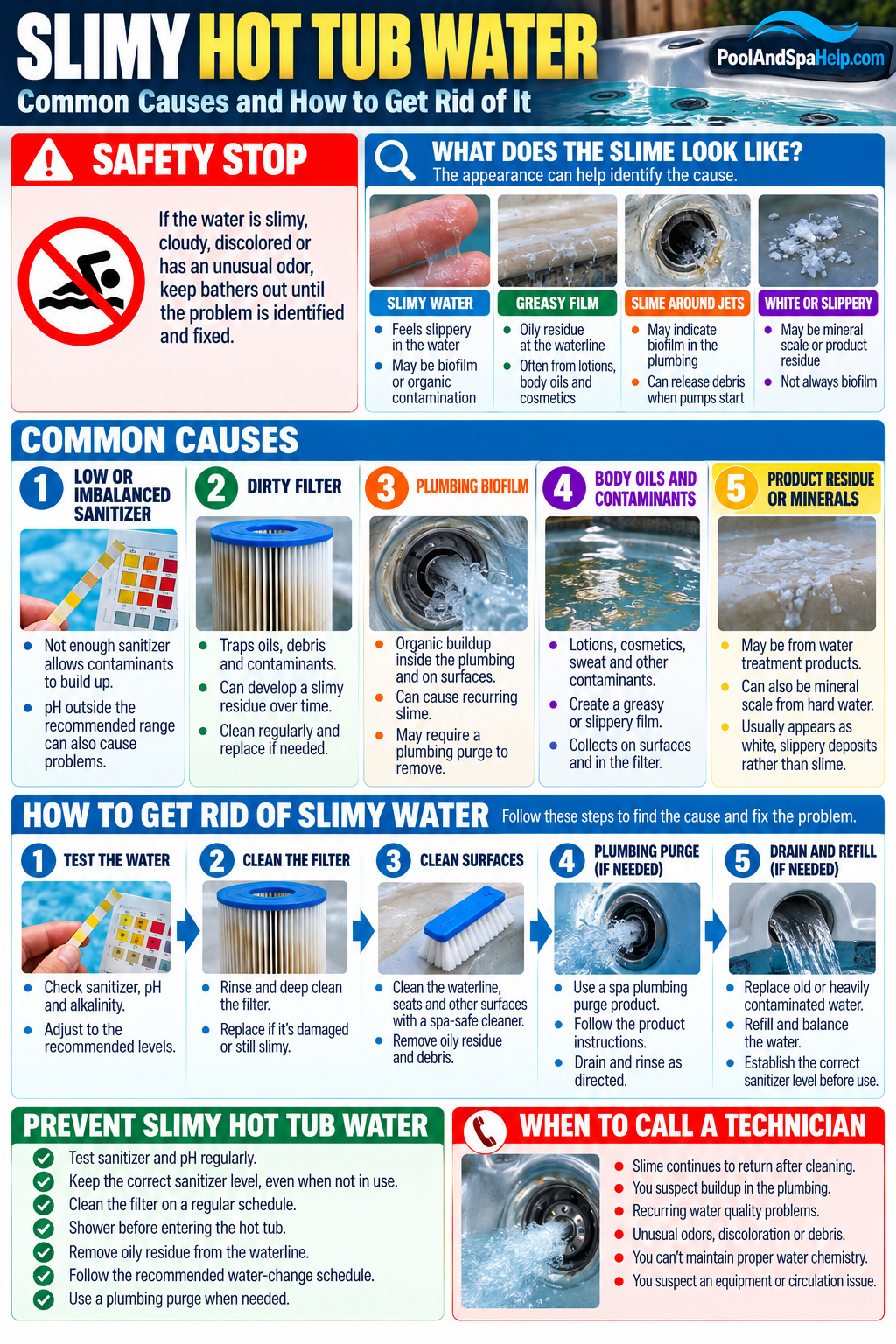
Hot tub water should feel clean, not slippery, greasy, or slimy. If your hot tub water feels slimy, or you notice a slippery film on the seats, waterline, filter, or inside the plumbing, something may be wrong with your water chemistry or sanitation.
The most common causes include biofilm, inadequate sanitizer levels, accumulated body oils, and organic contamination. In some cases, the slippery feeling comes from mineral deposits or residue left behind by water-treatment products.
The important thing is to identify where the slime is coming from and correct the underlying problem before using the hot tub again.
Why Is My Hot Tub Water Slimy?
Slimy hot tub water can have several causes. The location, texture, and appearance of the residue can help narrow down the possibilities.
- Slimy water and surfaces: May indicate biofilm, organic contamination, or inadequate sanitation.
- Greasy film around the waterline: Often associated with body oils, lotions, cosmetics, and other contaminants.
- Slimy residue around the jets: May indicate buildup inside the plumbing or around jet components.
- White, slippery deposits: May be mineral scale or residue from water-treatment products rather than biological growth.
- Slimy water after adding chemicals: May indicate product residue, a chemical reaction, or contaminants becoming visible during treatment.
These clues are useful, but appearance and feel alone cannot confirm the cause. Water testing and inspection are needed to determine the appropriate fix.
Safety Stop: Don’t Use the Hot Tub Until the Problem Is Corrected
Slimy water can indicate that the sanitizer is not adequately controlling contamination.
Before entering the hot tub:
- Test the sanitizer and pH levels.
- Keep bathers out if the water is slimy, cloudy, discolored, or has an unusual odor.
- Check for visible residue or deposits around the waterline, jets, and filter.
- Never mix different spa chemicals together.
- Follow the product manufacturer’s instructions for treatment and safe reuse.
Clear water is not necessarily safe water. If the sanitizer level is inadequate or the source of the slime is unknown, correct the problem before bathing.
Step 1: Test the Water Chemistry
Start by checking the sanitizer level and pH. Poor sanitation allows organic contaminants and microorganisms to accumulate.
For many residential hot tubs, typical targets are:
- Free chlorine: Approximately 3–5 ppm.
- Bromine: Approximately 4–6 ppm.
- pH: Approximately 7.2–7.8.
Always follow the recommendations for your particular hot tub and sanitizer system.
What do the results mean?
Low or zero sanitizer: The water may not be adequately disinfected. Contaminants can accumulate, and biofilm may develop.
pH outside the recommended range: Sanitizer performance can be affected, making it more difficult to maintain appropriate water conditions.
Normal readings but persistent slime: The problem may involve biofilm inside the plumbing, accumulated oils, contaminated surfaces, or residue that is not corrected by balancing the water alone.
Correct any imbalances according to the manufacturer’s instructions. Avoid repeatedly adding sanitizer without testing and identifying the underlying problem.
Step 2: Inspect the Hot Tub Surfaces
Turn off the pumps when required by your owner’s manual and inspect the accessible surfaces.
Check these areas:
- Seats and footwells.
- The waterline and corners of the shell.
- Around the jets and their fittings.
- The filter compartment.
- Areas where water circulates poorly.
A slippery film that wipes away may be accumulated oils or other residue. A persistent slimy layer, particularly around plumbing openings, may indicate biofilm.
Clean accessible surfaces with a hot tub-safe cleaner approved for your shell material. Avoid household detergents, abrasive cleaners, and products that may leave residues or damage the finish.
If slime quickly returns after cleaning, investigate the filter and plumbing rather than repeatedly wiping the same areas.
Step 3: Clean the Filter
Your hot tub filter collects oils, debris, and other contaminants. A dirty filter can contribute to poor water quality and may harbor residue that is difficult to remove with a quick rinse.
To inspect and clean the filter:
- Follow the owner’s manual for safely shutting down the spa and removing the filter.
- Examine the filter pleats for oily deposits, slime, discoloration, and debris.
- Rinse thoroughly with a garden hose.
- Use a compatible filter-cleaning product if deeper cleaning is necessary.
- Replace the filter if it is damaged or cannot be cleaned effectively.
A filter that looks clean on the outside may still contain embedded oils and contaminants.
If the water remains slimy after cleaning the filter, move on to the plumbing and water-change checks.
Step 4: Check for Biofilm Inside the Plumbing
Biofilm is a layer of microorganisms and organic material that can attach to surfaces inside pipes, pumps, and other wet components.
It can develop when contaminants accumulate and sanitation is inadequate. Once established, biofilm may be difficult to remove through ordinary water balancing alone.
Possible signs include:
- Slimy material appearing around the jets.
- Residue returning shortly after cleaning.
- Debris emerging when the pumps start.
- Persistent slime despite apparently normal water chemistry.
- Recurring water-quality problems after draining and refilling.
How to remove plumbing buildup
If biofilm is suspected, use a plumbing purge product specifically designed for hot tubs and compatible with your system.
- Check the product label and spa manufacturer’s instructions.
- Add the product at the specified dose.
- Circulate the water for the prescribed time.
- Drain the spa and remove the released residue as directed.
- Clean the shell and accessible components.
- Rinse as required, then refill and balance the water.
Some purge products release substantial amounts of residue as buildup is dislodged. This can be part of the cleaning process, but the product’s instructions must be followed carefully.
Do not substitute household bleach, drain cleaners, or improvised chemical mixtures for a purpose-designed plumbing cleaner.
Step 5: Remove Oils and Organic Contaminants
Not all slime is biofilm. Body oils, sweat, lotions, hair products, and other contaminants can accumulate in the water and around the waterline.
These substances may produce a greasy or slippery film, particularly after heavy hot tub use.
To address this problem:
- Clean the waterline with a spa-approved surface cleaner.
- Clean the filter thoroughly.
- Test and correct the sanitizer level.
- Use only compatible water-treatment products intended for the specific contaminant.
- Consider a water change if dissolved contaminants have accumulated.
Avoid adding extra clarifier, enzyme products, or other treatments without confirming that they are suitable for your water-care system. Too many incompatible products can create additional water-quality problems.
Step 6: Determine Whether the Water Needs to Be Changed
Sometimes the water has accumulated too many contaminants to restore it efficiently through routine treatment.
Consider draining and refilling when:
- The water remains slimy despite correcting the chemistry.
- The water is old and difficult to balance.
- Contamination is substantial.
- A plumbing purge has been completed and the product instructions call for draining.
- The water develops recurring slime or other persistent quality problems.
If biofilm is suspected, simply draining the water may not solve the problem. Buildup can remain inside the plumbing and contaminate the fresh water.
Follow the manufacturer’s draining and refilling procedures. In cold climates, take precautions against freezing damage and never leave vulnerable plumbing exposed to freezing temperatures.
After refilling, establish the correct water chemistry and sanitizer level before allowing anyone to use the tub.
Common Fixes for Slimy Hot Tub Water
| What you notice | Possible cause | Recommended action |
|---|---|---|
| Slippery water and surfaces | Poor sanitation or organic contamination | Test and correct the water chemistry. |
| Slimy residue around jets | Possible plumbing biofilm | Consider a compatible plumbing purge. |
| Greasy film at the waterline | Body oils and lotions | Clean the shell and filter. |
| Slime returns after cleaning | Persistent contamination or biofilm | Investigate the plumbing and consider a water change. |
| White slippery deposits | Mineral scale or product residue | Test water balance and inspect the deposits. |
| Slime after adding chemicals | Product residue or an underlying water-quality problem | Review the treatment used, retest the water, and follow label directions. |
When to Call a Hot Tub Technician
Contact a qualified hot tub technician if:
- Slime continues to return after proper cleaning and treatment.
- You suspect buildup in inaccessible plumbing or equipment.
- The water develops persistent odors, discoloration, or recurring contamination.
- You notice damaged jet fittings, deteriorating components, or unusual residue coming from the equipment.
- You cannot establish or maintain appropriate water chemistry.
If the problem is accompanied by an electrical smell, overheating, or another equipment safety concern, stop using the spa and arrange an inspection. Turn off the power at the breaker if it is safe to do so.
How to Prevent Slimy Hot Tub Water
Regular maintenance helps prevent slime from developing in the first place.
- Test sanitizer and pH regularly.
- Maintain the recommended sanitizer residual, even when the spa is not being used.
- Clean the filter according to the manufacturer’s schedule.
- Remove oily deposits from the waterline and shell.
- Encourage bathers to shower before entering the tub.
- Follow the recommended water-change schedule.
- Use a compatible plumbing purge when indicated by the condition of the spa.
- Keep a maintenance log to identify recurring water-quality problems.
Remember that a slippery surface is not a reliable indication of whether water is safe or unsafe on its own. Proper sanitation and testing are essential.
Frequently Asked Questions
Is slimy hot tub water dangerous?
It can be. Slimy water may indicate inadequate sanitation, contamination, or biofilm. Keep bathers out until the cause has been identified, the water has been treated appropriately, and the spa meets the manufacturer’s requirements for safe use.
Why does my hot tub feel slimy even when the water is clear?
Clear water can still contain contaminants. A dirty filter, accumulated oils, inadequate sanitizer, or biofilm inside the plumbing may cause a slippery feeling without making the water visibly cloudy.
Will shocking the hot tub remove the slime?
Shocking may help address certain water-quality problems when performed correctly, but it will not necessarily remove established biofilm or accumulated surface residue. Identify the cause first and follow your sanitizer manufacturer’s instructions.
Why does the slime come back after I drain the hot tub?
If biofilm or residue remains inside the plumbing, it can be released into the fresh water after refilling. A suitable plumbing purge, followed by draining and cleaning according to the product directions, may be necessary.
Can a dirty filter cause slimy hot tub water?
A dirty filter can contribute to poor water quality by retaining oils, debris, and other contaminants. However, slime may also result from inadequate sanitation or plumbing buildup, so cleaning the filter may not be sufficient on its own.
How often should I clean my hot tub filter?
The appropriate schedule depends on the filter type, spa usage, and water conditions. Follow the manufacturer’s recommendations, and clean it sooner if you notice heavy deposits, reduced circulation, or recurring water-quality problems.
Final Thoughts
Slimy hot tub water is a sign that something needs attention. Start by testing the water, inspecting the surfaces, and cleaning the filter. If the slime returns or appears around the jets, investigate possible plumbing buildup.
Don’t just treat the slime you can see. Find the source, correct the water conditions, and make sure the hot tub is safe before using it again.
Related Articles:
- Hot Tub Water Chemistry: A Simple Guide to Clear, Safe Water
- Why Is My Hot Tub Water Yellow or Brown?
- Hot Tub Cloudy Water
- Why Is My Hot Tub Water Milky White? Causes and Fixes
- Hot Tub Water Smells Musty? What to Check and How to Fix It
Written by Dan Harvickson (Founder of Last Mountain Tech) Pool and Spa Specialist