
Quick Summary
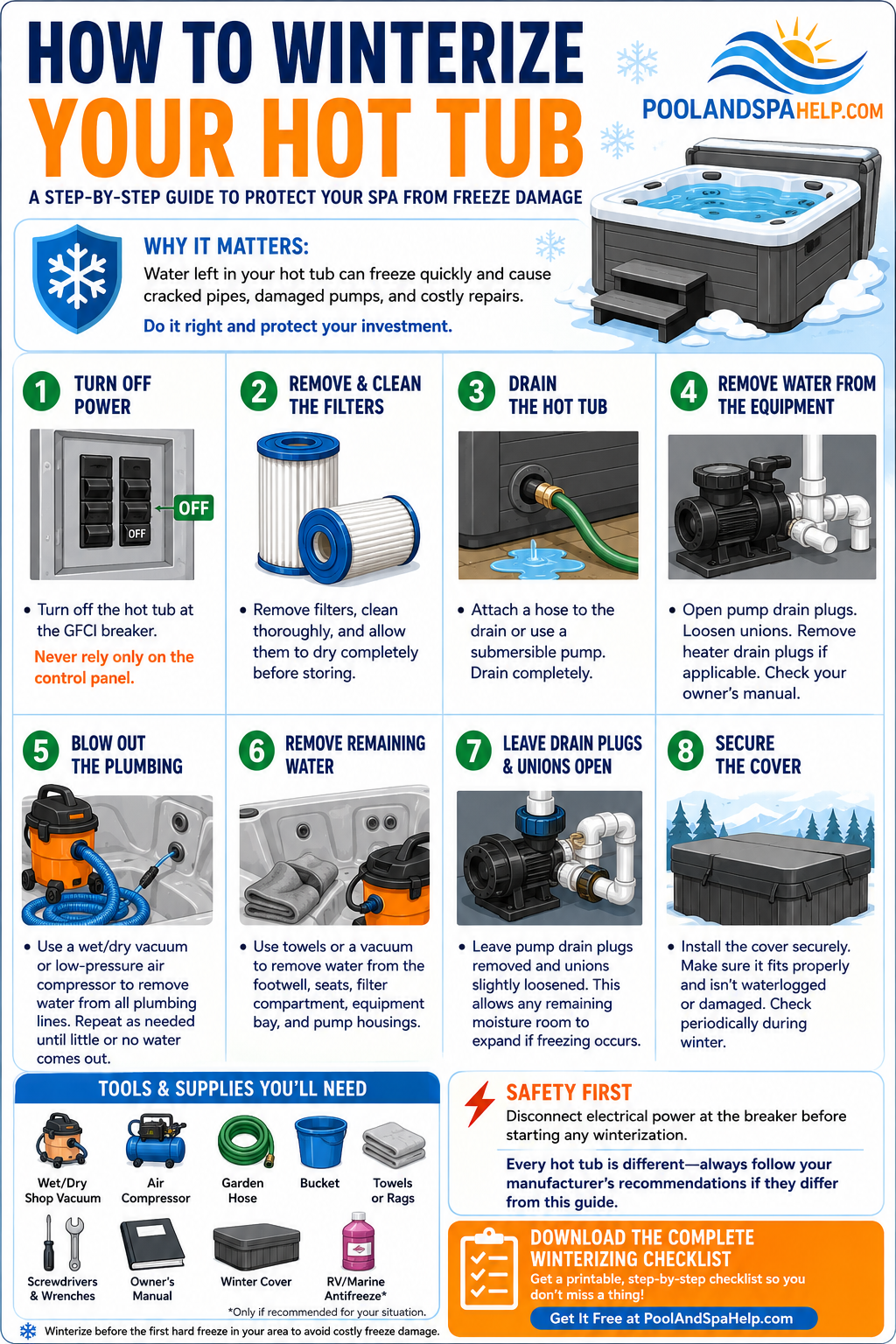
Winterizing a hot tub means completely removing water from the plumbing, pumps, heater, and equipment before freezing temperatures arrive. Missing even a small amount of water can lead to cracked pipes, damaged pumps, or a split heater manifold. If you’re uncomfortable with any part of the process, hiring a professional winterization service may cost far less than repairing freeze damage.
Your checklist should arrive by email within a few minutes. If you don’t see it, check your junk or spam folder.
By submitting your email, you’ll receive the free checklist and occasional helpful hot tub tips from PoolAndSpaHelp. Unsubscribe anytime.
⚠️ Safety Stop
Before you begin, disconnect electrical power to the hot tub at the breaker and verify that it cannot restart unexpectedly.
Freeze damage can happen quickly if water remains trapped inside plumbing or equipment. Every hot tub is slightly different, so always follow your manufacturer’s recommendations if they differ from this guide.
This article is provided for general educational purposes. Because every installation is unique, Last Mountain Tech cannot guarantee results or accept responsibility for damage resulting from improper winterization or misuse of this information.
Should You Winterize It Yourself?
Many homeowners successfully winterize their own hot tubs each year. However, it isn’t the right choice for everyone.
Consider hiring a professional if:
- Your hot tub has multiple pumps or complex plumbing.
- You’re unsure how to remove all of the water.
- Your spa has suffered freeze damage before.
- You won’t have time to double-check your work.
- You simply want peace of mind.
Professional winterization often includes:
- Complete water removal
- Plumbing blowout
- Equipment inspection
- Proper installation of winter plugs
- Recommendations for spring startup
Some service companies also warranty or guarantee their winterization work. Ask your local company what is included before scheduling service.
While doing the job yourself can save money, freeze damage can cost hundreds—or even thousands—of dollars if water is left inside the system.
Tools & Supplies You’ll Need
Gather everything before you begin.
Recommended tools include:
- Wet/dry shop vacuum
- Air compressor (used carefully and at appropriate pressure)
- Garden hose
- Bucket
- Towels or rags
- Screwdrivers
- Adjustable wrench
- Owner’s manual
- Winter cover in good condition
- Non-toxic RV/marine antifreeze (only if recommended for your particular situation)
Avoid using automotive antifreeze in a hot tub.
How to Winterize Your Hot Tub
Step 1: Turn Off Power
Turn off the hot tub at the GFCI breaker.
Never rely only on the control panel.
Step 2: Remove and Clean the Filters
Take the filters out of the spa.
Clean them thoroughly and allow them to dry completely before storing them indoors.
Replacing dirty filters during spring startup is also a good option if they are nearing the end of their service life.
Step 3: Drain the Hot Tub
Attach a garden hose to the drain fitting or use a submersible pump.
Allow the spa to drain completely.
Step 4: Remove Water From the Equipment
This is one of the most important steps.
Open pump drain plugs if equipped.
Loosen pump unions to allow trapped water to escape.
Remove any drain plugs from the heater if applicable.
Consult your owner’s manual for model-specific drain locations.
Step 5: Blow Out the Plumbing
Using a wet/dry vacuum or low-pressure air compressor, blow water from:
- Jet lines
- Suction lines
- Air lines
- Waterfall plumbing
- Pump plumbing
Continue until little or no water exits the plumbing.
Many professionals alternate between blowing and vacuuming several times to remove as much water as possible.
Step 6: Remove Remaining Water
Use towels or the wet/dry vacuum to remove water from:
- Footwell
- Seats
- Filter compartment
- Equipment bay
- Pump housings
Even small puddles can freeze in extremely cold climates.
Step 7: Add RV / Plumbing Antifreeze
Add some plumbing antifreeze to each jet and the filter canister.
Step 7: Leave Drain Plugs and Unions Open
Many technicians leave pump drain plugs removed and unions slightly loosened over winter.
This allows any remaining moisture room to expand if freezing occurs.
Follow your manufacturer’s recommendations.
Step 8: Secure the Cover
Install the hot tub cover securely.
Make sure it fits properly and isn’t waterlogged or damaged.
If heavy snow is expected during winter, inspect the cover periodically.
Download the Complete Winterizing Checklist
Want a printable version you can take outside?
Download the complete Hot Tub Winterizing Checklist, including:
- Printable step-by-step checklist
- Tool checklist
- Common mistakes to avoid
- Spring startup reminder
- Space for notes and maintenance records
👉 Download the checklist here.
Frequently Asked Questions
Should I use antifreeze in my hot tub?
In many cases, completely removing the water is sufficient. Some technicians use non-toxic RV/marine antifreeze in specific situations, but automotive antifreeze should never be used.
Can I just drain the hot tub?
No. Water remains trapped inside pumps, heaters, and plumbing. Simply draining the shell does not fully winterize the spa.
What happens if water freezes inside my hot tub?
Freeze damage can crack plumbing, pumps, heater manifolds, and fittings. Repairs can range from a few hundred dollars to several thousand dollars depending on the extent of the damage.
Is it better to leave my hot tub running all winter?
If you’ll continue using the hot tub and can maintain power, water chemistry, and regular maintenance, many owners simply operate their spa throughout the winter instead of winterizing it.
When should I winterize my hot tub?
Complete the process before the first hard freeze in your area. Waiting until temperatures are already below freezing increases the risk of damage.
Related Articles:
- Hot Tub Freezing? What to Do Before It Causes Damage
- Pool Winter Covers: Which Type Is Right for Your Pool?
- How to Winterize a Pool Heater: Protect It From Freeze Damage
- How to Winterize a Swimming Pool: Step-by-Step Guide to Prevent Freeze Damage
- Running a Hot Tub in Winter: How to Keep It Safe, Warm, and Efficient
Written by Dan Harvickson (Founder of Last Mountain Tech) Pool and Spa Specialist