
Quick Summary
Properly winterizing your swimming pool helps protect the plumbing, pump, filter, heater, and other equipment from costly freeze damage during the off-season. While the exact process varies depending on your pool and climate, following the correct winterization steps can make opening your pool next spring much easier.
Your checklist will arrive by email within a few minutes. If you don’t see it, check your junk or spam folder.
By submitting your email, you’ll receive the free checklist and occasional helpful pool tips from PoolAndSpaHelp. Unsubscribe anytime.
⚠️ Safety Stop
Before beginning, turn off all electrical power to the pool equipment and follow the manufacturer’s recommendations for your specific equipment.
Freeze damage can occur if water remains trapped inside plumbing, pumps, filters, heaters, or other equipment. Every pool is different, so always follow your equipment manufacturer’s instructions if they differ from this guide.
This article is provided for general educational purposes. Because every pool installation is unique, Last Mountain Tech cannot guarantee results or accept responsibility for damage resulting from improper winterization or misuse of this information.
Should You Winterize Your Pool Yourself?
Many pool owners successfully winterize their pools each fall. However, it isn’t always the best choice.
Consider hiring a professional if:
- This is your first time winterizing a pool.
- Your pool has an in-ground plumbing system.
- You’re unsure how to blow out underground plumbing.
- Your pool has multiple pumps, heaters, water features, or automation systems.
- You simply want peace of mind before winter.
Professional winterization often includes:
- Proper water balancing
- Complete plumbing blowout
- Equipment draining
- Installation of winterizing plugs
- Pool cover installation
- Equipment inspection
Many pool service companies also warranty or guarantee their winterization service. Ask what their guarantee includes before scheduling an appointment.
While winterizing your pool yourself can save money, repairing freeze damage to underground plumbing or pool equipment can be far more expensive.
Tools & Supplies You’ll Need
Before starting, gather the following tools and supplies:
- Pool test kit or test strips
- Pool chemicals for winterizing
- Pool brush
- Pool vacuum
- Garden hose
- Air compressor or pool line blower
- Winterizing plugs
- Skimmer gizmo (if applicable)
- Adjustable wrench
- Screwdrivers
- Pool cover
- Water bags or cover anchors (depending on cover type)
- Owner’s manuals for your equipment
How to Winterize Your Swimming Pool
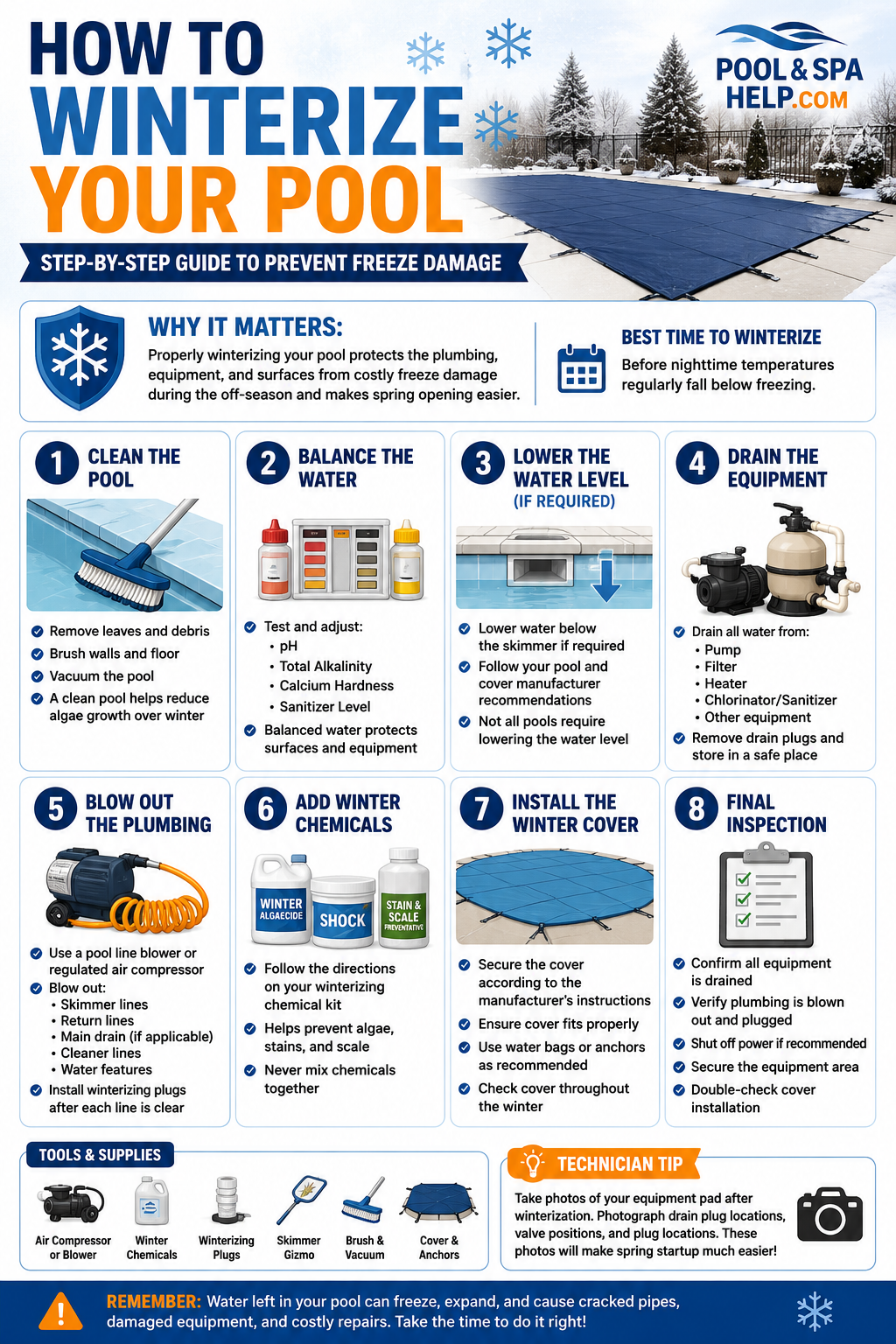
Step 1: Clean the Pool Thoroughly
Remove leaves, dirt, and debris.
Brush the walls and floor, then vacuum the pool.
A clean pool helps reduce algae growth during the winter months.
Step 2: Balance the Water Chemistry
Test and adjust the:
- pH
- Total alkalinity
- Calcium hardness
- Sanitizer level
Balanced water helps protect pool surfaces and equipment during storage.
Step 3: Lower the Water Level (If Required)
Some pools require lowering the water below the skimmer before winter.
Follow your pool manufacturer’s recommendations and the requirements of your winter cover.
Not all pools require lowering the water level.
Step 4: Drain the Equipment
Drain all water from:
- Pool pump
- Filter
- Heater
- Chlorinator or sanitizer system
- Any additional equipment
Remove drain plugs where applicable and store them somewhere you’ll remember in the spring.
Step 5: Blow Out the Plumbing
Using a pool line blower or properly regulated air compressor, remove water from:
- Skimmer lines
- Return lines
- Main drain (if applicable)
- Cleaner lines
- Water feature plumbing
Install winterizing plugs after each line has been cleared.
Step 6: Add Winter Chemicals
Follow the directions provided with your winterizing chemical kit.
Many winterizing kits include:
- Winter algaecide
- Pool shock
- Stain and scale preventative
Only use chemicals according to the manufacturer’s instructions.
Step 7: Install the Winter Cover
Secure the cover according to the manufacturer’s instructions.
Check that:
- The cover fits properly.
- Anchors or water bags are secure.
- No large openings remain where debris can enter.
Inspect the cover periodically throughout the winter.
Step 8: Final Inspection
Before leaving your pool for the winter:
- Confirm all equipment has been drained.
- Verify plumbing has been winterized.
- Store drain plugs in a safe location.
- Shut off electrical power if recommended.
- Secure the equipment area.
- Double-check that the cover is properly installed.
Download the Complete Pool Winterization Checklist
Want a printable checklist you can take outside?
Download the complete Pool Winterization Checklist, including:
- Printable step-by-step checklist
- Tool and supply checklist
- Water chemistry checklist
- Common mistakes to avoid
- Spring opening reminder
- Maintenance notes
👉 Download the checklist here.
Frequently Asked Questions
When should I winterize my swimming pool?
Winterize your pool before nighttime temperatures regularly fall below freezing. Waiting too long increases the risk of freeze damage.
Do all pools need to be winterized?
Pools located in climates with freezing temperatures should generally be winterized. Pools in warm climates may remain open year-round.
Can I just drain my pool equipment?
No.
Water can remain trapped inside plumbing and equipment even after draining. Proper winterization typically includes draining equipment and removing water from the plumbing.
Should I lower the pool water level?
It depends on your pool type and cover.
Some pools require lowering the water below the skimmer, while others do not. Follow the recommendations for your specific pool and cover.
Is hiring a professional worth it?
For many homeowners, yes.
Professional winterization can help reduce the risk of expensive freeze damage and often includes a workmanship guarantee.
Technician Tip
Take photos of your equipment pad after winterization.
Photograph:
- Drain plug locations
- Valve positions
- Winterizing plugs
- Water heater settings
- Filter drain locations
Those photos can make spring startup much easier if you forget how everything was configured.
Related Articles:
- How to Winterize a Pool Heater: Protect It From Freeze Damage
- Pool Winter Covers: Which Type Is Right for Your Pool?
- Hot Tub Winterizing: Step-by-Step Guide to Protect Your Spa From Freeze Damage
- Running a Hot Tub in Winter: How to Keep It Safe, Warm, and Efficient
- Hot Tub Freezing? What to Do Before It Causes Damage
Written by Dan Harvickson (Founder of Last Mountain Tech) Pool and Spa Specialist