
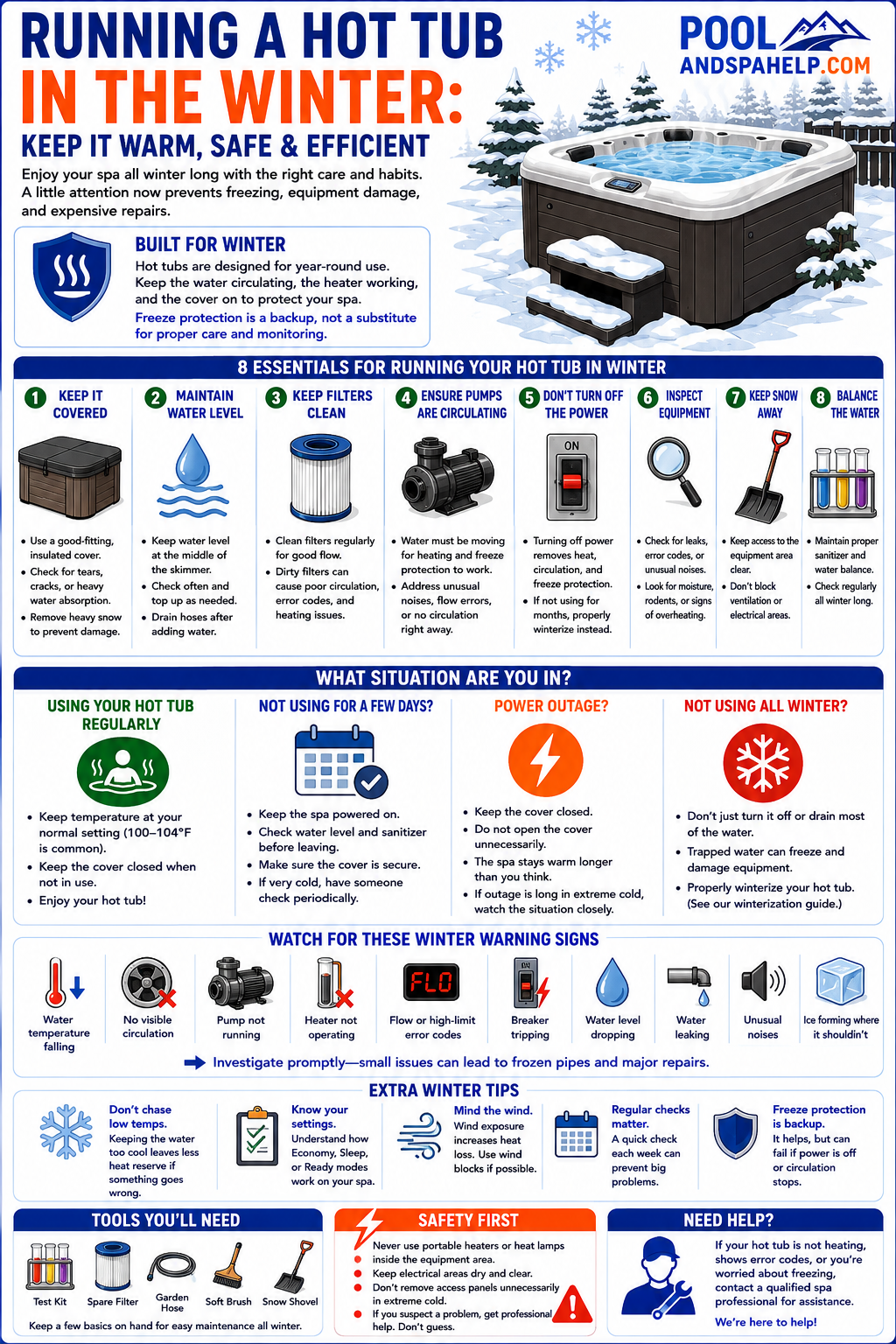
There’s something particularly nice about using a hot tub when it’s freezing outside.
Cold air, snow on the ground, and 100°F-plus water can make winter one of the best times of year to own a spa.
But winter also introduces something hot tub owners don’t have to worry about nearly as much during summer:
Freezing.
A properly operating hot tub can run all winter, even in very cold climates. In fact, many hot tubs are designed specifically for year-round use.
The important part is keeping the water circulating, maintaining heat, protecting the equipment, and catching problems before freezing temperatures turn a small issue into an expensive repair.
Here’s what you should know before running your hot tub through the winter.
Can You Run a Hot Tub All Winter?
Yes.
A properly maintained hot tub can normally remain filled, heated, and operating throughout the winter.
The heater maintains the water temperature while the circulation or filtration system keeps water moving through the plumbing and equipment.
Many modern spas also have some form of freeze protection built into their controls.
However, freeze protection should be considered a backup feature, not a substitute for regular maintenance and monitoring.
If the spa loses power, stops circulating, develops a leak, or experiences an equipment failure, freeze protection may no longer be able to protect it.
That’s why a running hot tub should still be checked regularly during freezing weather.
What Temperature Should You Keep a Hot Tub in Winter?
You don’t necessarily need to lower the temperature just because it’s cold outside.
Many people keep their spa somewhere around 100–104°F (38–40°C) while actively using it, depending on personal preference and manufacturer recommendations.
If you use the hot tub less frequently during winter, you may be tempted to turn the temperature way down to save electricity.
Be careful with that approach.
The colder you keep the water, the less reserve heat the spa has if something goes wrong.
A spa containing warm water can take quite some time to cool to dangerous temperatures. A spa that is already being maintained at a much lower temperature has less of that buffer.
If you’re simply going a few days between uses, maintaining a relatively normal temperature may make more sense than repeatedly allowing the spa to cool and reheating it.
Related: What Temperature Should You Keep a Hot Tub When Not in Use?
1. Keep the Hot Tub Covered
Your cover is one of the most important parts of winter hot tub operation.
A large amount of heat can escape through the surface of the water.
A good-fitting, insulated cover helps keep that heat where you want it — inside the spa.
Before winter, inspect the cover for:
- Cracks or torn vinyl
- Damaged seams
- Broken straps or locks
- Waterlogged foam
- Poor fit
- Large gaps around the edge
An old, heavy, waterlogged cover can lose much of its insulating ability.
Remove Excessive Snow
A light layer of snow isn’t necessarily a problem, but don’t allow large amounts of heavy snow or ice to accumulate on the cover.
Wet snow can become surprisingly heavy.
Use care when removing it so you don’t tear or puncture the cover.
Avoid sharp shovels or tools that could damage the vinyl.
2. Maintain the Water Level
This becomes especially important during winter.
Hot tubs naturally lose water from evaporation, splashing, and people getting in and out.
If the water level drops too far, the pump may have difficulty maintaining proper circulation.
That can potentially lead to:
- Low-flow conditions
- Heater shutdown
- Error codes
- Loss of circulation
- Increased risk of freezing
Check the water level regularly and top it up when necessary.
Be Careful When Adding Water in Freezing Weather
If you’re adding water outdoors during freezing temperatures, plan ahead.
Don’t leave a garden hose full of water outside afterward. Drain it and put it somewhere it won’t freeze.
Also avoid leaving the hot tub uncovered any longer than necessary during extreme cold.
3. Keep the Filters Clean
Good water flow is important all year.
During winter, it becomes even more important because the heating and freeze-protection systems may depend on adequate circulation.
Dirty filters can restrict water flow.
Depending on the spa, that may contribute to:
- Reduced circulation
- Heater problems
- Flow errors
- High-limit faults
- Heating shutting down
Inspect and clean the filters regularly.
If a filter is damaged, heavily scaled, or no longer cleans properly, replace it.
If you’re troubleshooting a suspected flow problem, follow the spa manufacturer’s instructions. Some diagnostic procedures may involve briefly testing operation without a filter, but don’t routinely operate the spa without its filters installed.
4. Make Sure the Pumps Are Circulating Water
Your hot tub can’t protect itself very well if water isn’t moving.
Depending on the design, the spa may use a dedicated circulation pump or periodically run one of the main jet pumps for filtration and heating.
Pay attention to how your spa normally operates.
If you suddenly notice:
- No circulation
- Unusual pump noises
- Flow-related error codes
- Water temperature dropping
- Heater no longer operating
don’t ignore it during freezing weather.
A circulation problem that might be inconvenient during summer can become much more serious when temperatures are well below freezing.
Related: Hot Tub Pump Not Working? Here’s What to Check First
5. Don’t Shut Off the Breaker to Save Electricity
Turning the hot tub off completely might sound like an easy way to reduce your winter electric bill.
It’s usually a bad idea if the spa is still full of water.
Once power is removed, you lose the heater, circulation and automatic freeze-protection functions.
The water in the main shell may stay warm for quite a while, especially in a well-insulated spa.
But the water inside small plumbing lines and equipment can cool much faster.
If you don’t plan to operate the hot tub during winter, properly winterize it instead of simply turning it off.
Related: How to Winterize a Hot Tub
6. Check the Equipment Compartment
Occasionally inspect the equipment area during winter.
You’re looking for anything unusual, including:
- Water where it shouldn’t be
- Dripping fittings
- Unusual pump noises
- Error codes
- Signs of overheating
- Evidence of rodents
- Excessive moisture
A small leak deserves attention at any time of year.
During freezing weather, it’s more urgent.
Losing water can eventually cause circulation problems, while leaking water can freeze around equipment or inside areas that weren’t designed for it.
Don’t remove equipment access panels unnecessarily during extreme cold, though. Those panels often form part of the spa’s insulation system.
Inspect what you need to inspect, then reinstall them properly.
7. Keep Snow Away From Important Areas
Your spa may look great surrounded by snow, but don’t let snow bury important equipment or ventilation areas.
Keep access to the equipment compartment clear.
Also keep snow away from electrical equipment and any openings that the manufacturer says must remain unobstructed.
You don’t necessarily need to uncover the entire area around the spa after every snowfall.
You just need to make sure the hot tub can continue operating normally and that you’ll be able to reach the equipment if something goes wrong.
8. Keep the Water Balanced
Winter doesn’t mean you can forget about water chemistry.
The hot tub still needs normal sanitizer and water-balance maintenance.
Continue monitoring:
- Sanitizer
- pH
- Total alkalinity
- Calcium hardness where applicable
- Water clarity
Follow the chemical and water-care recommendations for your particular spa and sanitizer system.
Poor water chemistry can damage heaters, seals, pumps and other components — regardless of the temperature outside.
Should You Use Economy Mode During Winter?
Personally I usually recommend against using economy mode in the winter. But if you’re considering using it, you should understand what the setting actually does on your spa.
Terms such as Economy, Sleep, Rest, and Ready can mean different things depending on the control system.
On some spas, an economy-type mode limits when the heater is allowed to operate, often tying heating to filtration cycles.
That can allow the water temperature to drop considerably between heating periods.
During very cold weather, I generally prefer owners to understand exactly how their heating mode works rather than switching modes simply because “Economy” sounds cheaper.
Check the owner’s manual before changing heating modes for winter operation.
If you aren’t sure what the setting does, leaving the spa in its normal operating mode is often the simpler choice.
What About Going Away for a Few Days?
This is where winter hot tub ownership requires a little more planning.
If you’re leaving for a weekend, the spa doesn’t normally need to be winterized.
Before leaving:
- Check the water level.
- Balance and sanitize the water.
- Make sure the filters are clean.
- Verify that the spa is heating normally.
- Check for leaks.
- Make sure the cover is properly secured.
- Check the weather forecast.
If you’re going away for an extended period during very cold weather, consider having someone check the spa periodically.
The concern isn’t that a properly operating spa can’t handle the cold.
The concern is that you won’t be there if it stops operating.
What Happens During a Power Outage?
Don’t panic immediately.
A well-insulated hot tub containing hundreds of gallons of hot water generally doesn’t freeze the instant the power goes out.
Keep the cover closed.
Every time you open the cover, you allow heat to escape.
Avoid repeatedly checking the water temperature unless necessary.
How quickly the spa cools depends on many factors, including:
- Outdoor temperature
- Wind
- Insulation
- Starting water temperature
- Spa size
- Cover condition
- Length of the outage
The colder and windier it is, the more closely the situation needs to be watched.
If power is restored relatively quickly, the spa may simply resume normal operation.
A long outage during extreme cold is a different situation.
Don’t Use Improvised Heat Without Understanding the Risks
When owners become worried about freezing, it’s tempting to put a portable heater, heat lamp, or another heat source inside the equipment compartment.
That can introduce fire, electrical, and equipment-damage risks.(I have personally seen a couple of spas catch on fire due to improperly installed and unattended space heaters)
If the spa has lost heat and freezing is becoming a concern, follow manufacturer guidance or contact a qualified spa technician rather than improvising with unattended heating equipment.
We’ll cover the appropriate first steps in more detail in:
Related: What to Do If Your Hot Tub Starts to Freeze
Watch for These Winter Warning Signs
During freezing weather, investigate promptly if you notice:
- Water temperature steadily falling
- No visible circulation
- Pump not running
- Heater not operating
- Flow or high-limit error codes
- Breaker repeatedly tripping
- Water level unexpectedly dropping
- Water leaking around the spa
- Unusual pump noises
- Ice forming where it normally doesn’t
You don’t necessarily have a major failure.
But winter isn’t the best time to wait several days and see whether a circulation or heating problem fixes itself.
Should You Run the Jets During Winter?
You can use the jets normally while you’re enjoying the spa.
There’s generally no need to periodically run all the jets manually just because it’s winter unless your manufacturer specifically recommends it.
The spa’s normal filtration, circulation, heating, and freeze-protection programming should handle routine operation.
If certain plumbing isn’t circulating when it normally should, that’s a troubleshooting issue rather than something that should require the owner to constantly turn the jets on manually.
Is It More Expensive to Run a Hot Tub in Winter?
Usually, yes.
As the temperature difference between the hot water and outdoor air increases, the spa loses heat faster.
The heater therefore has to operate more often.
How much more electricity the spa uses depends heavily on:
- Outdoor temperature
- Wind exposure
- Spa insulation
- Cover condition
- Desired water temperature
- How frequently the spa is used
- How long the cover stays open
A well-insulated spa with a good cover can perform surprisingly well in cold climates.
A poorly insulated spa with a damaged or waterlogged cover may cost considerably more to keep warm.
Should You Winterize the Hot Tub Instead?
If you’re going to use the spa throughout winter, keep it operating.
If you know you won’t use it for several months, winterizing may make more sense.
But don’t choose the middle ground of simply draining most of the water or turning off the power.
Water can remain trapped inside pumps, heaters, manifolds, jets and plumbing even when the shell appears empty.
That trapped water can freeze, expand and damage components.
Proper winterization involves removing or protecting water throughout the entire system.
Related: Hot Tub Winterizing: Step-by-Step Guide to Protect Your Spa From Freeze Damage
Winter Hot Tub Checklist
Before the really cold weather arrives, make sure:
- The spa heats normally.
- Pumps and circulation systems work correctly.
- Filters are clean.
- Water chemistry is balanced.
- The cover fits properly and is in good condition.
- The water level is correct.
- There are no known leaks.
- Equipment panels are installed properly.
- You understand the spa’s heating and freeze-protection settings.
- You know who you’ll call if the spa stops operating during extreme cold.
A little preparation is much easier than dealing with frozen plumbing in January.
Frequently Asked Questions
Can a hot tub stay outside all winter?
Yes. Many hot tubs are designed for year-round outdoor operation, including cold climates. The spa needs to remain properly powered, heated, maintained and protected according to the manufacturer’s instructions.
Will a hot tub freeze if the power goes out?
Not immediately. A covered, insulated spa containing hot water has a significant amount of stored heat. How long it remains safe depends on the outdoor temperature, wind, insulation, cover condition and length of the outage.
What temperature should I keep my hot tub at during winter?
Many owners continue using their normal soaking temperature during winter. If you lower the temperature when the spa isn’t being used, make sure you understand how your spa’s heating and freeze-protection systems operate.
Should I turn my hot tub off when I’m not using it?
Not if it’s full of water during freezing weather. Keeping the spa powered allows its heating, circulation and freeze-protection systems to operate. If you’re shutting it down for the season, properly winterize it.
Should I leave my hot tub running while I’m on vacation?
For shorter trips, a properly operating hot tub can normally remain running. Check the water, filters, heating, cover and equipment before leaving. During extended absences in very cold weather, having someone periodically check the spa provides additional protection.
Can snow damage a hot tub cover?
Heavy accumulated snow and ice can put considerable weight on a cover. Remove excessive accumulation carefully and avoid using sharp tools that could puncture or tear the cover.
Final Thoughts
Winter doesn’t have to mean closing your hot tub.
In fact, for many owners, winter is when a hot tub is most enjoyable.
Keep the spa powered. Maintain the water level and chemistry. Keep the filters clean. Make sure circulation and heating are working normally. Use a good insulated cover and check the spa regularly.
Most importantly, pay attention when something changes.
A heating or circulation problem that can wait until tomorrow in July may deserve much faster attention when it’s -20°F (-29°C) outside.
If you’re planning to stop using the hot tub altogether, properly winterize it rather than simply shutting off the power.
And if the temperature is already dropping and you’re worried the spa may be starting to freeze, that’s no longer routine winter maintenance.
Related Articles:
- Hot Tub Winterizing: Step-by-Step Guide to Protect Your Spa From Freeze Damage
- Hot Tub Freezing? What to Do Before It Causes Damage
- Hot Tub Losing Temperature During Use? Here’s What to Check First
- How to Winterize a Swimming Pool: Step-by-Step Guide to Prevent Freeze Damage
- Pool Winter Covers: Which Type Is Right for Your Pool?
Written by Dan Harvickson (Founder of Last Mountain Tech) Pool and Spa Specialist